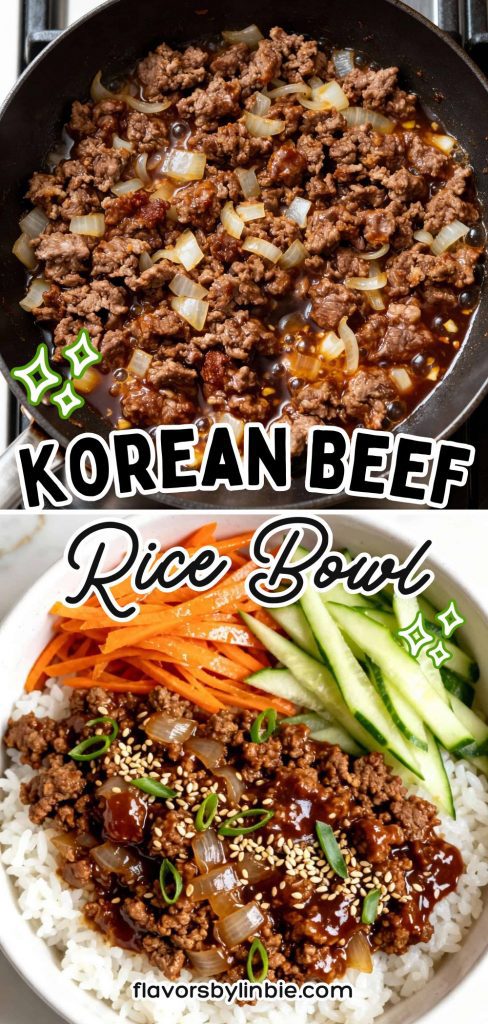
This Korean Beef Rice Bowl is fast, flavorful, and totally satisfying. It’s the kind of recipe you can pull together on a busy weeknight but still feels like something special. Sweet, salty, a little spicy — all over warm rice with juicy ground beef and crispy veggies. You’re gonna love it.
Why I Love This Recipe
This one takes me back to a tiny takeout spot I found years ago tucked into a strip mall — the kind of place where the food’s always hot, the flavors are big, and the service is super fast. I started making my own version at home, and it became a weekly go-to. Now I crave it all the time.
- Comes together in 25 minutes
- Everything cooks in one pan
- Sauce is better than takeout
- Super flexible — add any veggies
- Tastes amazing the next day
Servings: 4
Total Time: 25 minutes
What You’ll Need
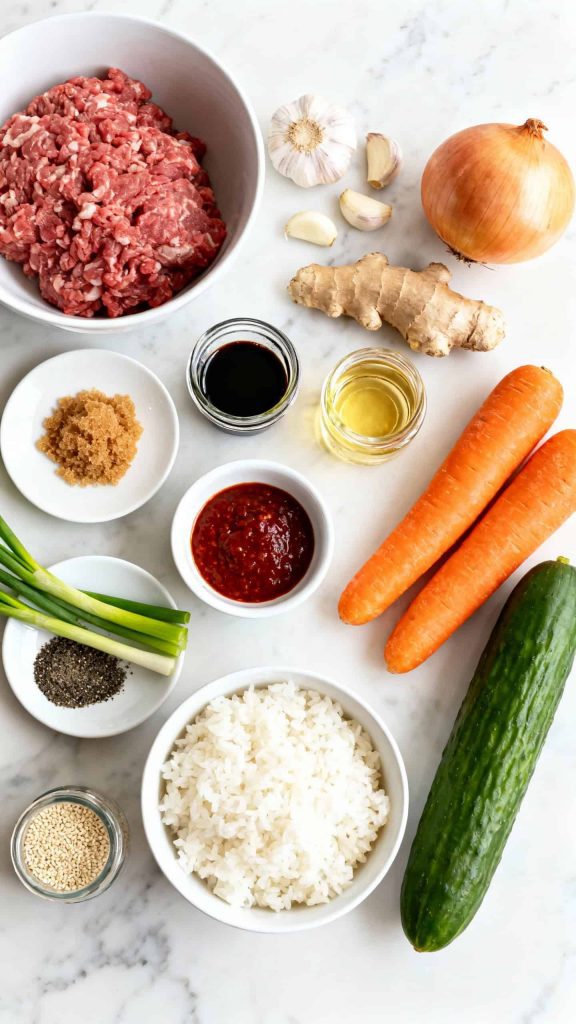
- 1 lb ground beef (80/20 works great)
- 3 garlic cloves, minced
- 1 small onion, diced
- 1 tbsp freshly grated ginger
- 1/4 cup low-sodium soy sauce
- 2 tbsp brown sugar
- 1 tbsp sesame oil
- 1 tbsp gochujang (Korean chili paste)
- 2 carrots, julienned or shredded
- 1/2 cucumber, thinly sliced
- 2 green onions, thinly sliced
- 1 tsp sesame seeds
- 3 cups cooked white rice (jasmine or short-grain)
Pro Tips
- Grate ginger using a microplane for best texture
- Use leftover rice from the fridge — it holds up better
- Don’t skip gochujang; it gives that authentic Korean flavor
- Sauté carrots just slightly so they stay crisp
- Add a fried egg on top for an extra treat
Tools Required
- Large nonstick skillet or wok
- Wooden spoon or spatula
- Cutting board
- Sharp knife
- Rice cooker or pot
- Measuring spoons and cups
- Small grater for ginger
Substitutions and Variations
- Use ground turkey or chicken instead of beef
- Swap brown sugar with honey
- Skip cucumbers if you’re not a fan — add bell peppers instead
- Sub tamari for soy sauce if gluten-free
- Add kimchi on top for extra kick
Make Ahead Tips
- Make the sauce (soy sauce, sugar, sesame oil, gochujang, garlic, ginger) ahead and store in the fridge for 3 days
- Cook rice in advance and keep it chilled until ready to use
- Chop veggies earlier in the day to save time
Cooking Instructions
Step 1: Prep the Sauce
In a small bowl, mix 1/4 cup soy sauce, 2 tbsp brown sugar, 1 tbsp sesame oil, 1 tbsp gochujang, 3 minced garlic cloves, and 1 tbsp grated ginger. Stir until sugar dissolves.
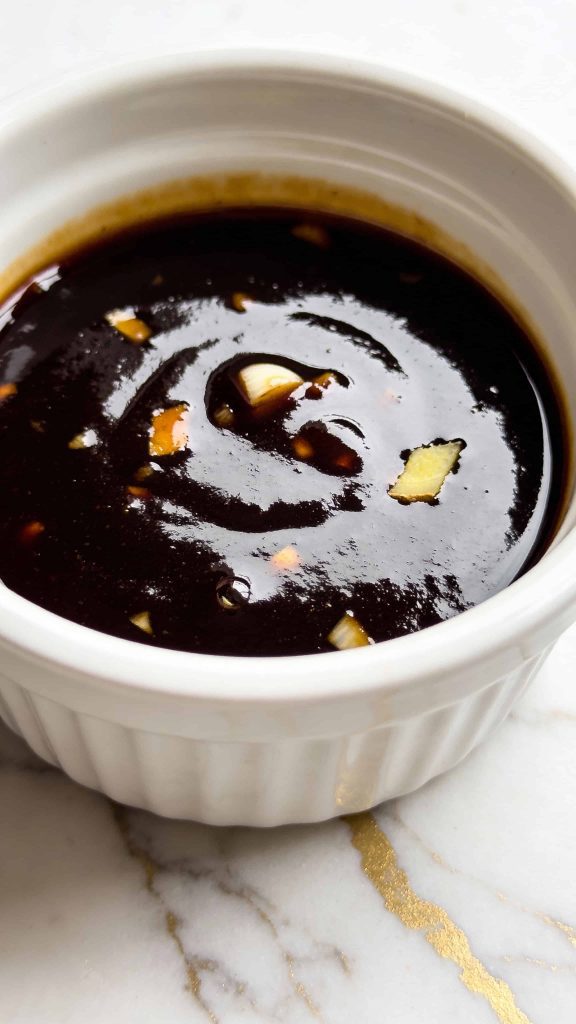
Step 2: Cook the Beef and Onion
Heat a large skillet over medium-high heat. Add 1 lb ground beef and 1 diced onion. Cook for 6–7 minutes until beef is browned and onions are soft. Break up beef with a spoon.
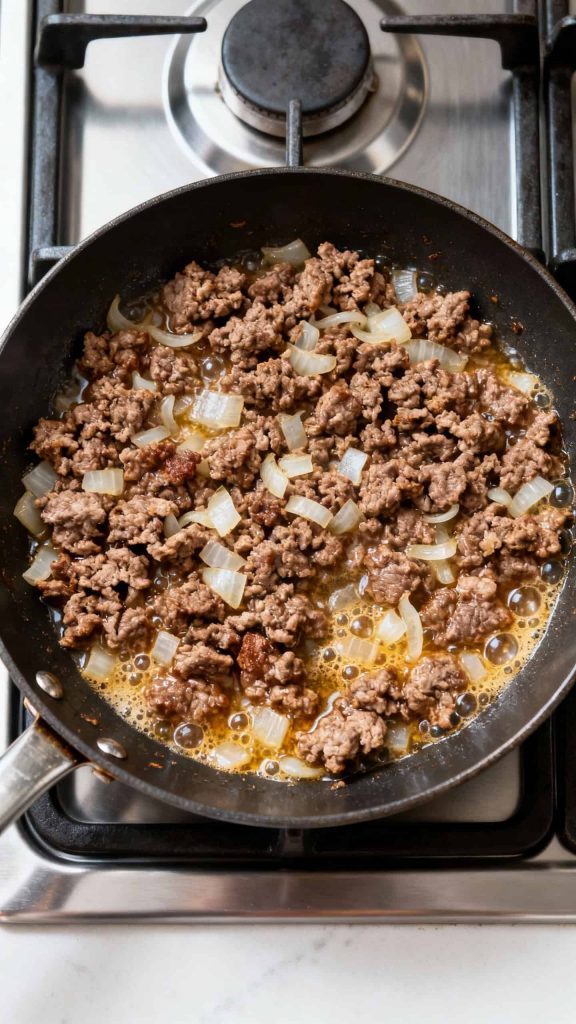
Step 3: Add the Sauce
Pour the sauce over the beef mixture. Stir well and simmer for 2–3 minutes until slightly thickened and glossy.
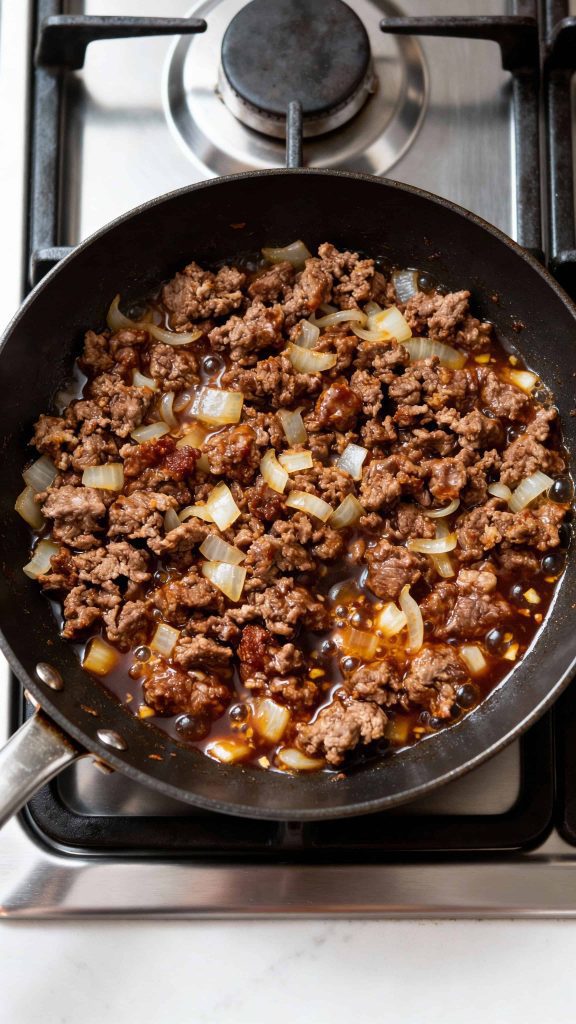
Step 4: Sauté the Carrots
In another pan or push beef to one side, quickly sauté 2 julienned carrots for 2–3 minutes until just tender but still bright.
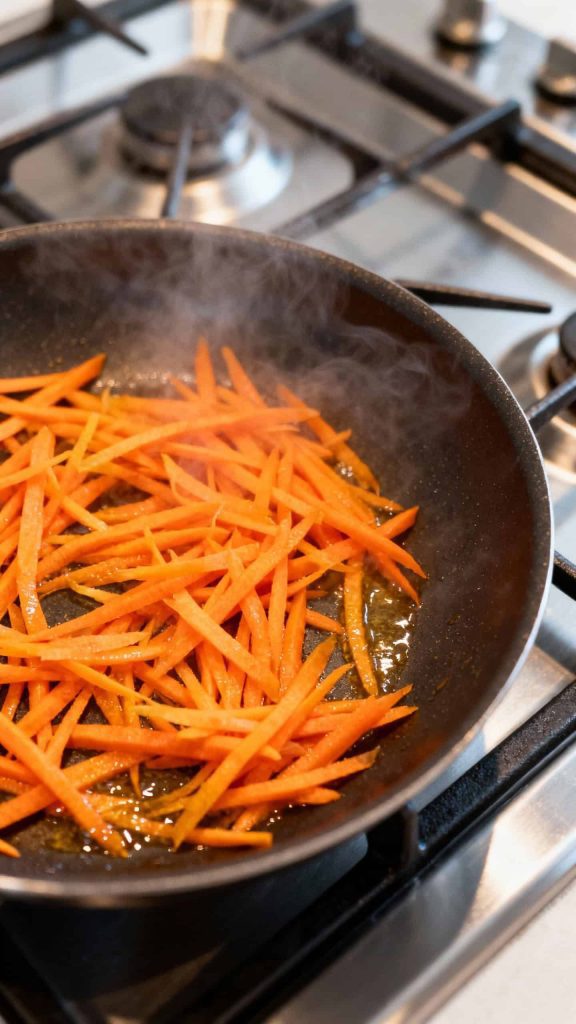
Step 5: Assemble the Bowl
In a round bowl, layer 3/4 cup cooked white rice. Top with a big scoop of Korean beef, sautéed carrots, sliced cucumbers, green onions, and sprinkle with sesame seeds. Optional: Drizzle extra gochujang on top.

Leftovers and Storage
- Store leftovers in an airtight container in the fridge for up to 4 days
- Reheat in the microwave or in a pan with a splash of water
- Keep rice and beef separate from veggies if possible
Why This Recipe Works (Quick Science)
The soy sauce and sugar create a quick caramelization on the beef, locking in flavor and moisture. Gochujang adds depth with umami and heat, while the sesame oil gives a rich nuttiness. Cooking the onions and beef together releases natural juices that soak into the meat — no bland bites here.
Common Mistakes
- Overcooking the beef: makes it dry
- Not draining grease if there’s too much fat
- Using raw garlic in the sauce without letting it cook into the meat — it’ll taste too sharp
- Skipping the veggies — they balance the rich beef
- Using too much gochujang if you’re not used to spice
What to Serve With
- Steamed or stir-fried broccoli
- Kimchi or pickled veggies
- Miso soup or egg drop soup
- Fried egg on top of the bowl
- Seaweed salad
FAQ
Can I make it vegetarian?
Yes, swap the ground beef for crumbled tofu or a plant-based meat.
Is it spicy?
Mild to medium. Gochujang has heat, but it’s not overpowering. Adjust to taste.
Can I use leftover rice?
Definitely! Day-old rice actually works better because it’s less sticky.
Do I need gochujang?
It’s what gives this dish its signature flavor. If you don’t have it, use a mix of sriracha and miso as a backup — but try to get the real thing when you can!
If you try this Korean Beef Rice Bowl, let me know how it goes! Drop your questions or tell me how you made it your own. Enjoy every bite!