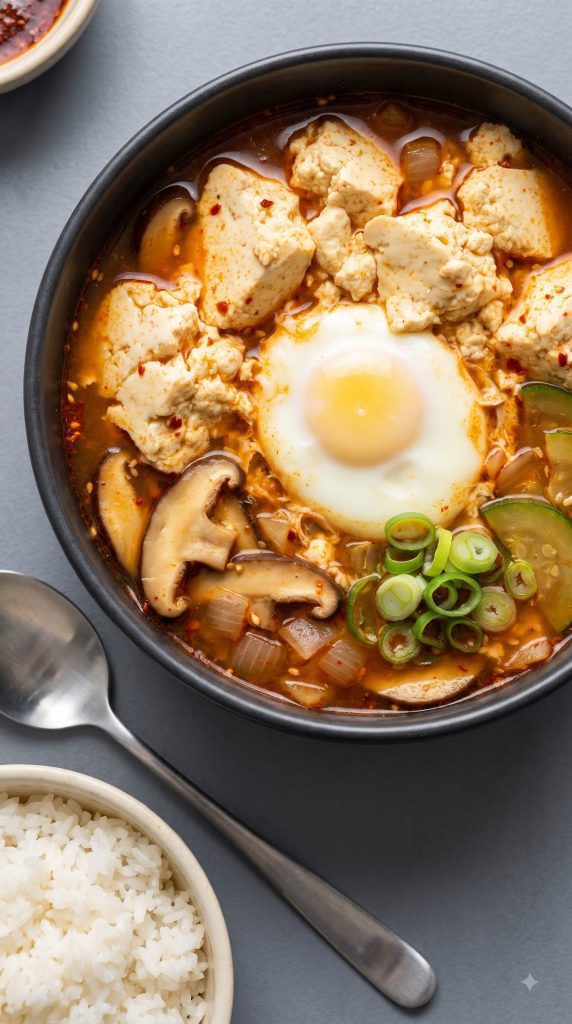
Sundubu Jjigae (Korean Tofu Soup) brings silky tofu, tender mushrooms, and a bold red broth to the table in about half an hour. This meat-free version uses shiitake mushrooms, zucchini, and a cooked egg for a cozy, filling bowl. Gochugaru gives the soup its gentle smoky sweetness and chili heat. Serve it with short-grain rice to catch every last spoonful.
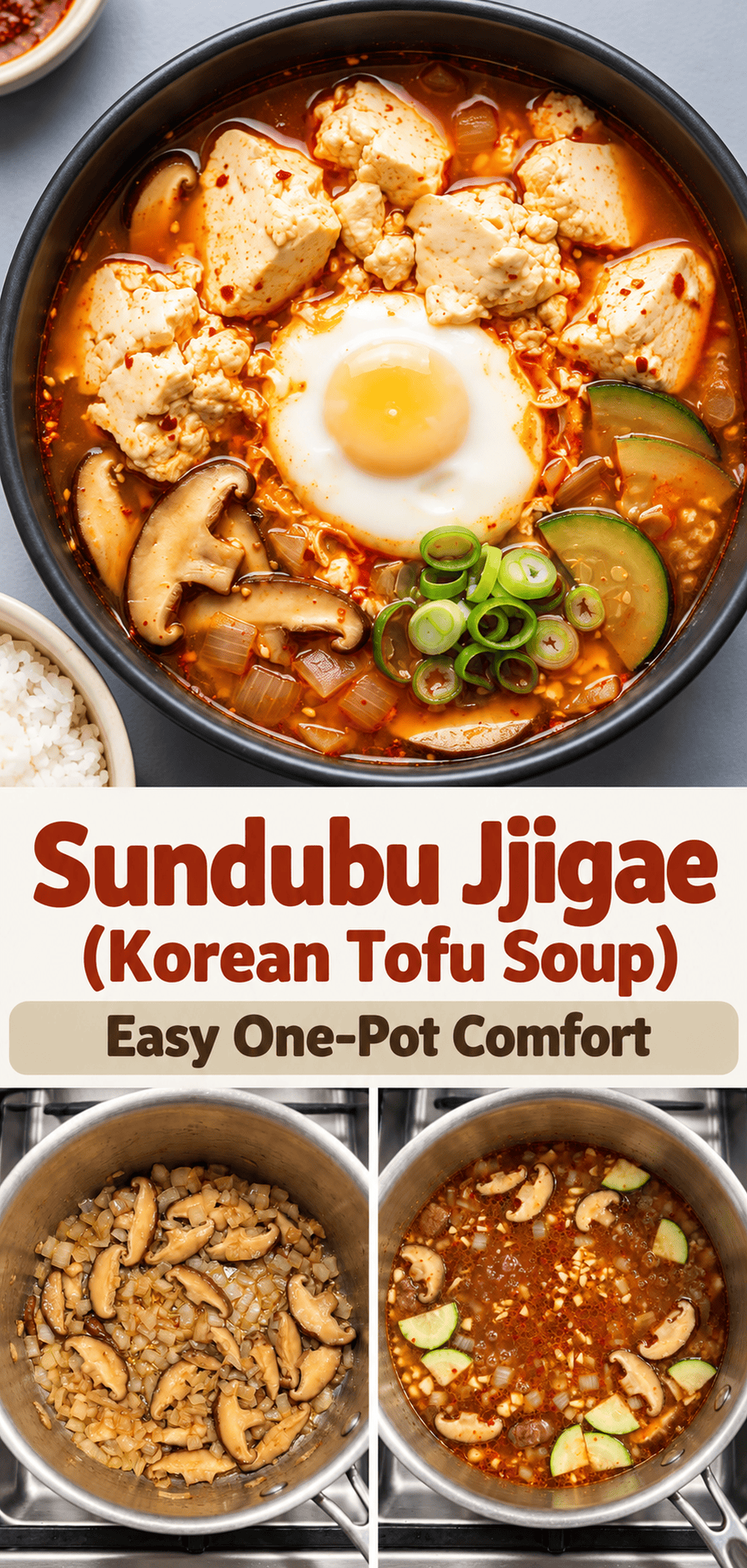
Why I Love This Recipe
The soft tofu is the heart of this soup. It breaks into tender curds that hold their shape just enough to scoop, while the broth stays thin and full of flavor. A short simmer keeps the zucchini tender without turning it to mush.
- Simple cooking: Everything cooks in a regular saucepan.
- Big flavor: Mushrooms, garlic, and soy sauce build a savory broth.
- Easy heat control: You can reduce the chili flakes without changing the method.
- A filling finish: Soft tofu and an egg make each bowl satisfying.
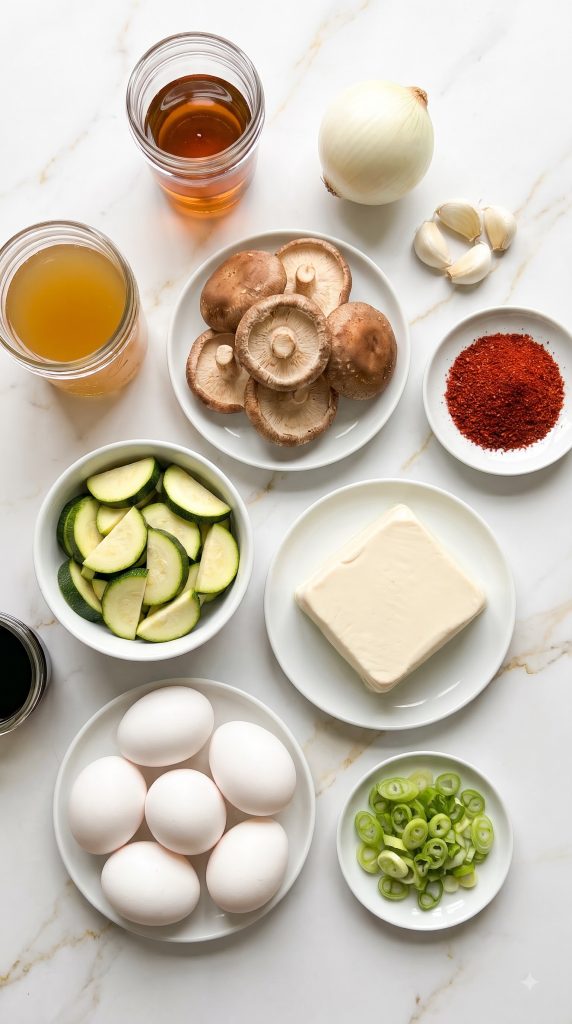
What You’ll Need
- Servings: 2 generous main-dish servings
- Prep Time: 10 minutes
- Cook Time: 20 minutes
- Total Time: 30 minutes
- Cooking vessel: 3-quart saucepan
- 1 tablespoon toasted sesame oil
- 1/2 cup finely diced onion
- 4 ounces fresh shiitake mushrooms, stems removed, caps thinly sliced
- 2 garlic cloves, minced
- 1 tablespoon gochugaru (Korean red chili flakes)
- 2 cups low-sodium vegetable broth
- 1 tablespoon low-sodium soy sauce
- 1/2 cup zucchini, cut into thin half-moons
- 12 ounces Korean extra-soft tofu (sundubu), drained gently without pressing
- 2 large eggs
- 2 tablespoons thinly sliced scallion greens, for garnish
Choose plain extra-soft tofu, often sold in a tube. Silken tofu is a useful substitute; firm tofu will give a very different texture. [Maangchi’s soft tofu guide](https://www.maangchi.com/ingredient/soon-du-bu) explains the difference and the silken-tofu option. Use fine or medium gochugaru rather than a chili blend with cumin or other added spices.
Tools You Need
- 3-quart stainless-steel saucepan with a lid
- Wooden spoon
- Tablespoon and measuring cup
- Wooden cutting board and kitchen knife
- Instant-read thermometer
- Ladle and deep soup bowls
How to Make Sundubu Jjigae (Korean Tofu Soup)
Prepare all your ingredients before heating the pot; the chili flakes cook quickly.
Step 1: Soften the Onion and Mushrooms
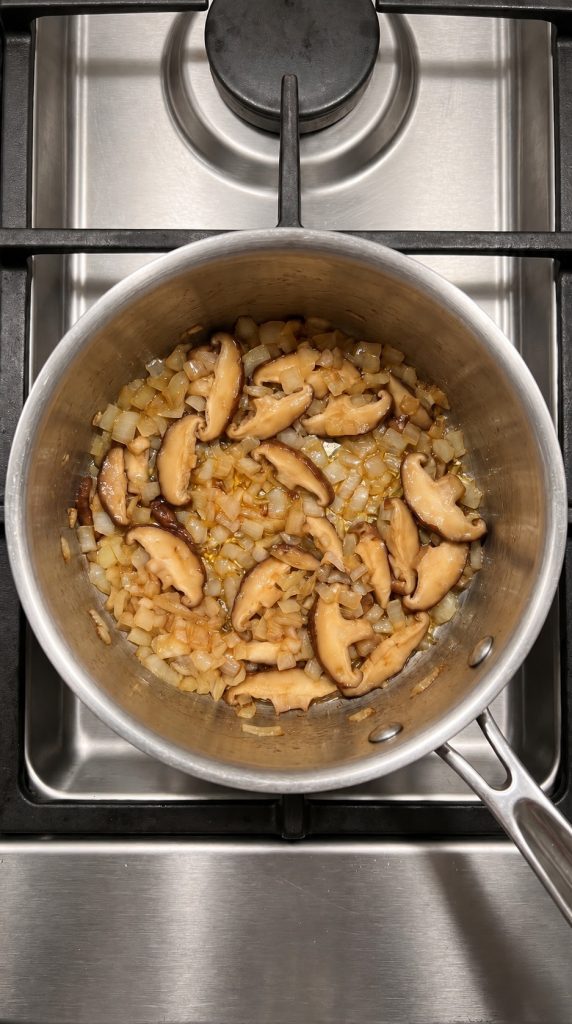
Heat 1 tablespoon toasted sesame oil in a 3-quart saucepan over medium-low heat.
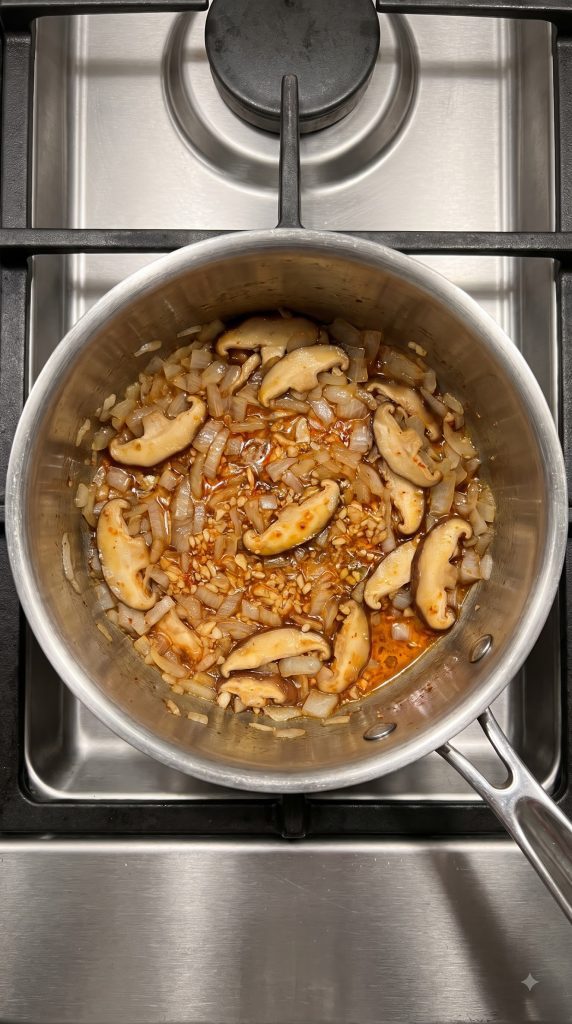
Add 1/2 cup finely diced onion and 4 ounces thinly sliced shiitake mushroom caps.
Cook, stirring often, for 5 minutes, until the onion is translucent and the mushrooms soften. Keep the heat gentle so the oil does not smoke.
Step 2: Bloom the Chili
Reduce the heat to low and stir in 2 minced garlic cloves and 1 tablespoon gochugaru.
Stir for 30 seconds, just until fragrant. Do not let the chili or garlic brown; scorched flakes make the broth bitter.
Step 3: Build the Broth
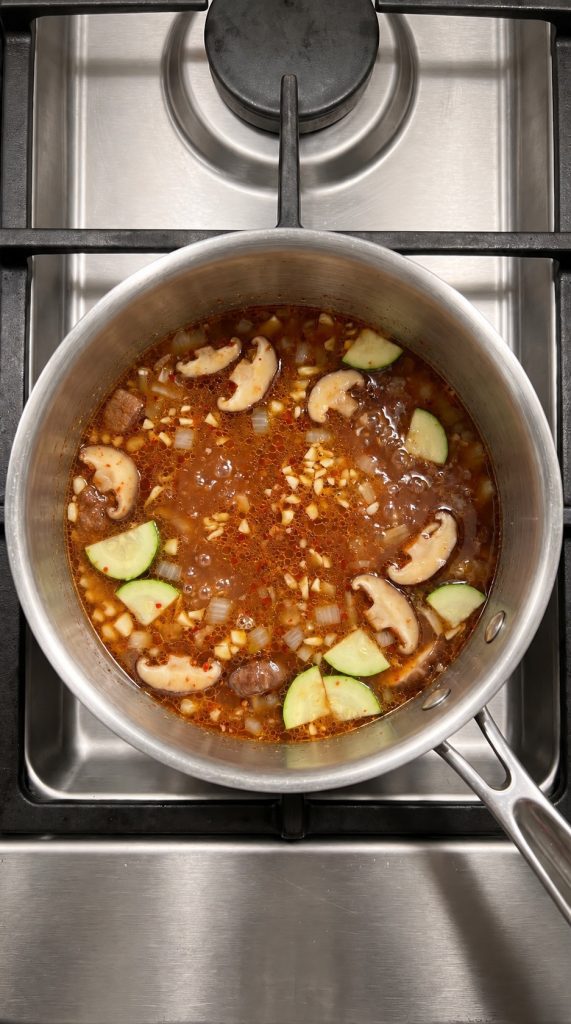
Pour in 2 cups low-sodium vegetable broth and 1 tablespoon low-sodium soy sauce, then stir gently to loosen the chili mixture from the bottom.
Add 1/2 cup thin zucchini half-moons and bring to a gentle simmer over medium heat, about 3 minutes.
Simmer uncovered for 4 minutes, until the zucchini begins to soften. The broth should be thin and brick-red, with tiny oil beads on top.
Step 4: Gently Cook the Tofu and Eggs
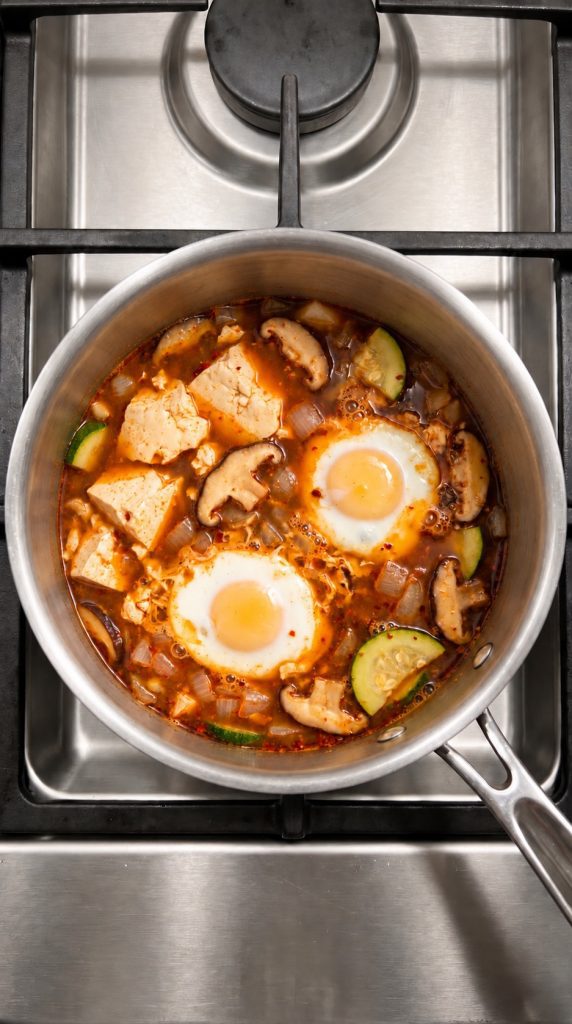
Spoon 12 ounces drained extra-soft tofu into the broth in large irregular curds. Do not press it or stir hard.
Crack 2 large eggs into separate open spaces in the soup, keeping them apart so each serving gets one.
Cover and maintain a gentle simmer for 7 minutes, until the tofu is heated through and both eggs have fully set whites and firm yolks. If needed, cook a little longer; the center of each egg should reach 160°F (71°C).
Step 5: Garnish and Serve
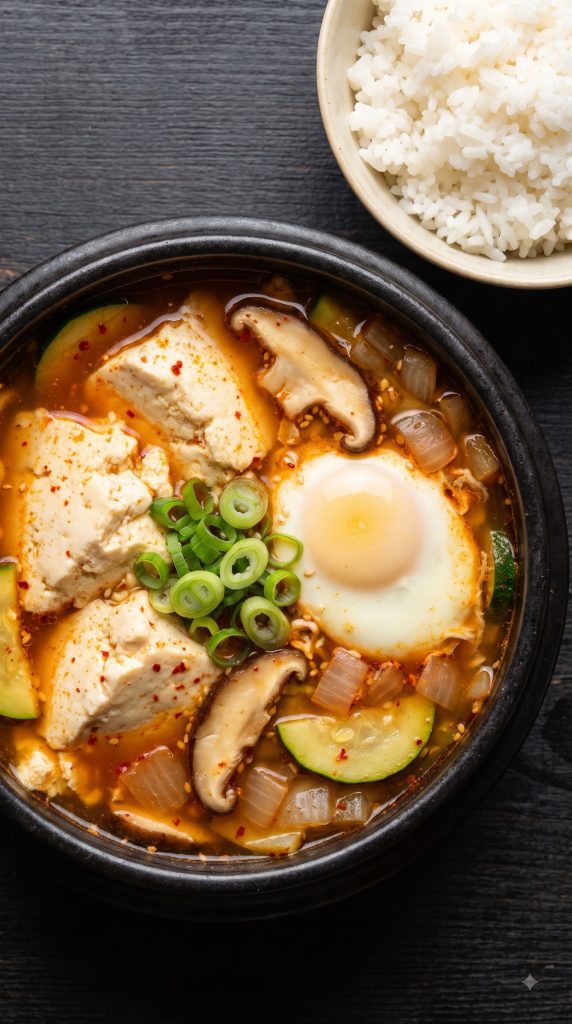
Divide the soup gently between two deep bowls, giving each bowl half the tofu and vegetables and 1 cooked egg.
Scatter 2 tablespoons thinly sliced scallion greens over the bowls, using 1 tablespoon per serving.
Serve with optional cooked short-grain white rice in a separate small bowl. Spoon a little rice into each bite rather than stirring it into the whole pot.
Why This Recipe Works (Quick Science)
A brief bloom in oil spreads the chili flavor through the soup. Adding broth soon afterward keeps the flakes from burning. Mushrooms bring savory depth without needing meat, while the soft tofu warms through with very little cooking. Gentle heat and light handling keep those delicate curds from breaking into tiny bits.
Common Mistakes to Avoid
- Using firm tofu: It stays springy instead of forming silky curds. Choose extra-soft tofu or silken tofu.
- Burning the chili: Keep the heat low during the brief bloom, and have the broth ready.
- Boiling hard: A rolling boil can break the tofu and toughen the eggs. Use a gentle simmer.
- Adding salt too soon: Broth and soy sauce vary in saltiness. Taste the finished soup first.
- Overcrowding a small pot: Use the stated saucepan size so the eggs have space to cook apart.
What to Serve With Sundubu Jjigae (Korean Tofu Soup)
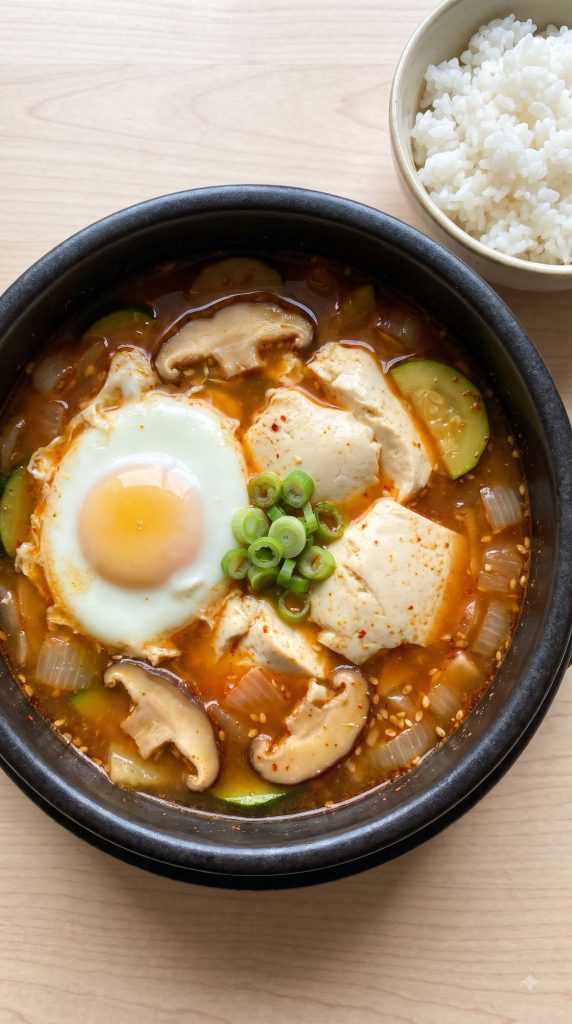
Cooked short-grain white rice is the simple side shown with this soup. Its mild flavor balances the chili broth, and its soft grains pair well with the tofu. Keep it in a separate bowl so the soup stays brothy. The rice is optional and is not included in the nutrition estimate.
Substitutions and Variations
- Milder soup: Use 1 teaspoon gochugaru instead of 1 tablespoon. The broth will be paler than the main version.
- Different mushrooms: Replace the shiitake caps with 4 ounces sliced cremini mushrooms.
- Vegan option: Leave out the eggs and choose vegan broth and soy sauce. Simmer the tofu until heated through.
- Soy sauce option: Use the same amount of low-sodium tamari if preferred, checking all labels if avoiding gluten.
This is a mushroom-and-egg version, without kimchi, pork, or seafood. Those ingredients suit other versions, but they change the seasoning and cooking needs.
Leftovers and Storage
Cool leftovers promptly and refrigerate in a covered container within 2 hours. Use within 3 days. Reheat gently on the stove until the soup reaches 165°F (74°C), adding a small splash of water if it has thickened. The eggs will become firmer when reheated. Freezing is possible, but the tofu will lose its silky texture, so refrigeration is the better choice.
Macros Information
Estimated per serving, including the cooked egg and scallions but excluding rice:
- Calories: 290 kcal
- Protein: 20 g
- Carbohydrates: 16 g
- Fat: 18 g
- Saturated Fat: 3 g
- Fiber: 4 g
- Sugar: 6 g
- Sodium: 730 mg
These values are estimates and vary with the tofu, broth, and soy sauce you use.
Frequently Asked Questions (FAQ)
Q: Is this a soup or a stew?
A: Jjigae is often called a stew. This version has a generous amount of tofu and vegetables in a fairly small amount of broth, so it sits between the two English descriptions.
Q: Do I need a Korean earthenware pot?
A: No. A regular saucepan works well. Use deep bowls for serving, and handle the pot with care.
Q: Can I use silken tofu from a carton?
A: Yes. Spoon it in gently and leave it in large curds. Do not squeeze out the moisture or try to brown it first.
Q: Is gochujang the same as gochugaru?
A: No. Gochugaru is dried chili flakes, while gochujang is a seasoned fermented paste. Swapping them changes the broth’s sweetness, salt, and texture.
Q: Can I leave out the eggs?
A: Yes. Heat the tofu through in the gentle simmer and finish with the scallions. The soup will have less protein and fat.
Q: Why is my broth cloudy?
A: A little cloudiness is normal when soft tofu breaks up. A hard boil or heavy stirring breaks it down further. Use a gentle simmer and move the curds as little as possible.
Q: Can I make it ahead?
A: You can prepare the mushroom broth ahead and refrigerate it. Bring it back to a simmer before adding the tofu and eggs for the best texture.
Q: How can I make it less spicy?
A: Start with the reduced gochugaru amount in the variations section. Serve rice alongside it, and use less chili next time if your flakes are especially strong.
Final Thoughts
Sundubu Jjigae (Korean Tofu Soup) is a simple way to turn soft tofu and a few vegetables into a comforting meal. Keep the simmer gentle, leave the curds generous, and finish with fresh scallions. Leave a comment and share how spicy you made your bowl. Happy cooking!