Miso Soup with Tofu is a gentle, savory soup that comes together with just a few ingredients. Soft tofu and wakame float in a thin, cloudy broth with a mild miso flavor. Fresh scallion rings add a little bite at the end. Serve it as a light first course or add rice and a protein for a fuller meal.
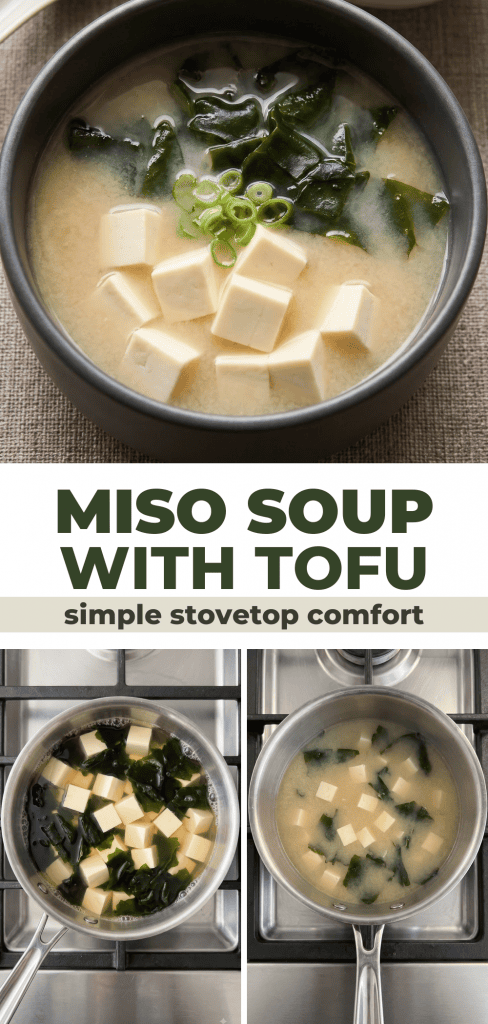
Why I Love This Recipe
This soup gets its depth from dashi and miso, so it does not need a long ingredient list. The method is simple, but a few small details keep the tofu whole and the broth smooth.
- Quick cooking: Prepared dashi keeps the stovetop work short.
- Gentle flavor: White miso gives the broth a mild, savory taste with a little sweetness.
- Tender texture: Soft tofu warms through without a hard boil.
- Easy portions: The recipe makes four small bowls to serve alongside a meal.
What You’ll Need
- Servings: 4 small bowls, about 1 cup each
- Prep Time: 10 minutes
- Cook Time: 10 minutes
- Total Time: 20 minutes
- Pan Size: 2-quart saucepan
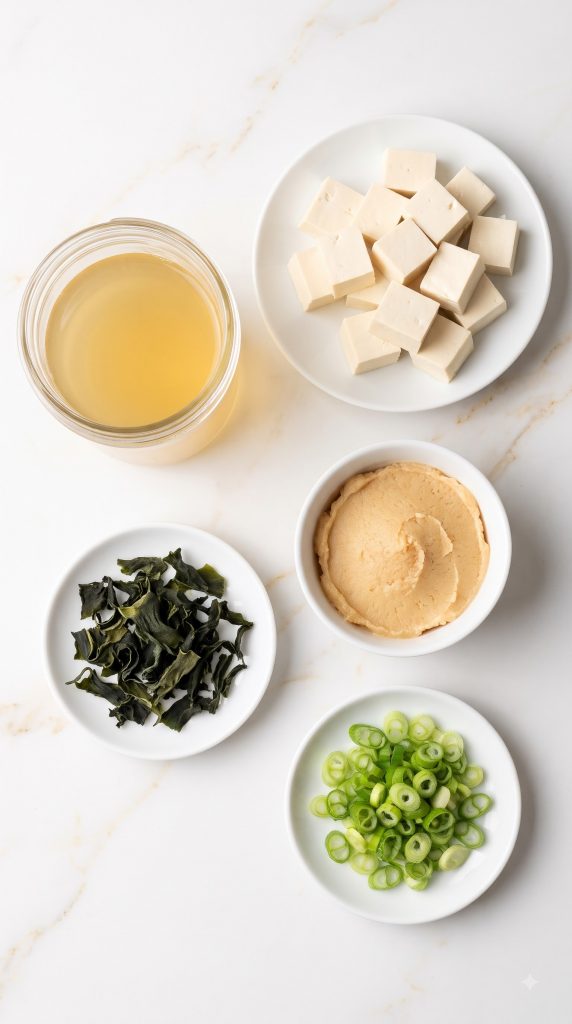
Ingredients:
- 4 cups unsalted prepared dashi, made with kombu and bonito
- 8 ounces soft tofu, drained and cut into 1/2-inch cubes
- 1 tablespoon dried cut wakame
- 3 tablespoons white miso paste
- 2 tablespoons thinly sliced scallion greens, for garnish
Choose plain soft tofu rather than an extra-soft tube-style tofu that may break apart easily. Use unsalted dashi so the miso supplies the seasoning. Prepared dashi means broth that is already brewed or mixed according to its package directions, not concentrated powder used by itself.
Tools You Need
- Round deep 2-quart brushed stainless steel saucepan with a straight rim and a single long solid riveted stainless steel handle
- Measuring cups and spoons
- Wooden cutting board and a sharp kitchen knife
- Small round clear glass mixing bowl with a smooth rim and no handles
- Ladle and small whisk
- Soup bowls
How to Make Miso Soup with Tofu
Keep the heat gentle and dissolve the miso separately for a smooth broth.
Step 1: Heat the Dashi
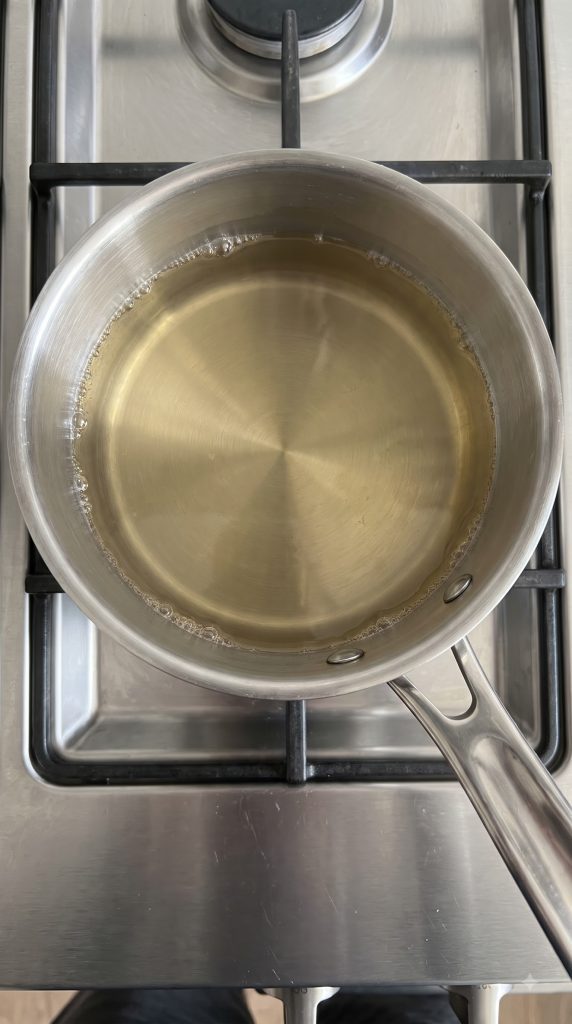
Pour 4 cups unsalted prepared dashi into the 2-quart saucepan.
Bring it to a gentle simmer over medium heat, about 5 minutes. Small bubbles should appear around the edges rather than across the whole surface.
Step 2: Warm the Tofu and Wakame
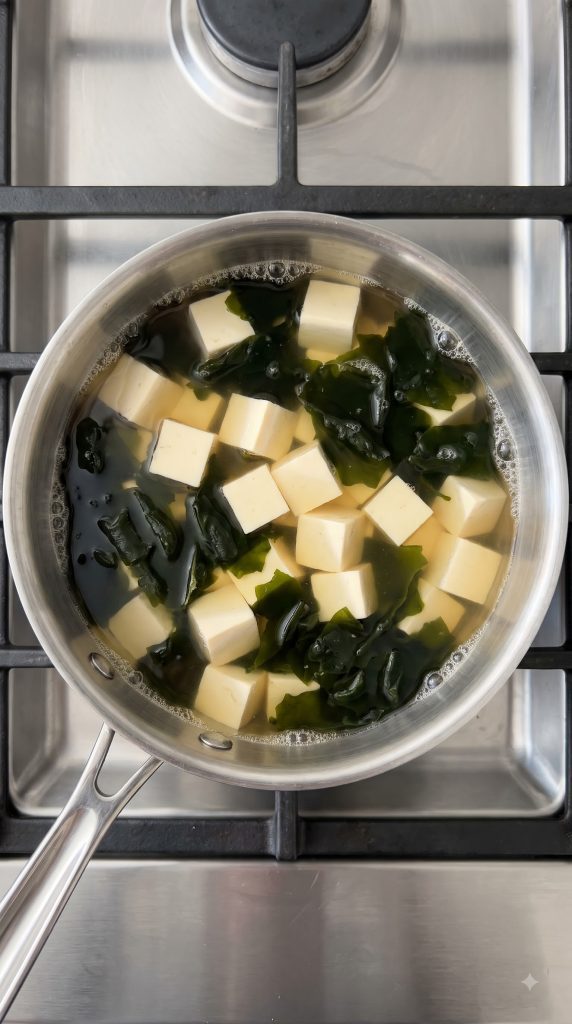
Lower the heat and gently add 8 ounces soft tofu, drained and cut into 1/2-inch cubes, and 1 tablespoon dried cut wakame to the dashi.
Keep at a bare simmer for 3 minutes, until the tofu is warmed through and the wakame has opened into soft ruffled pieces. Avoid vigorous stirring so the tofu keeps its shape.
Step 3: Dissolve the Miso
Turn off the heat. Ladle 1/2 cup broth from the saucepan into a small glass bowl, leaving the tofu and wakame in the pan.
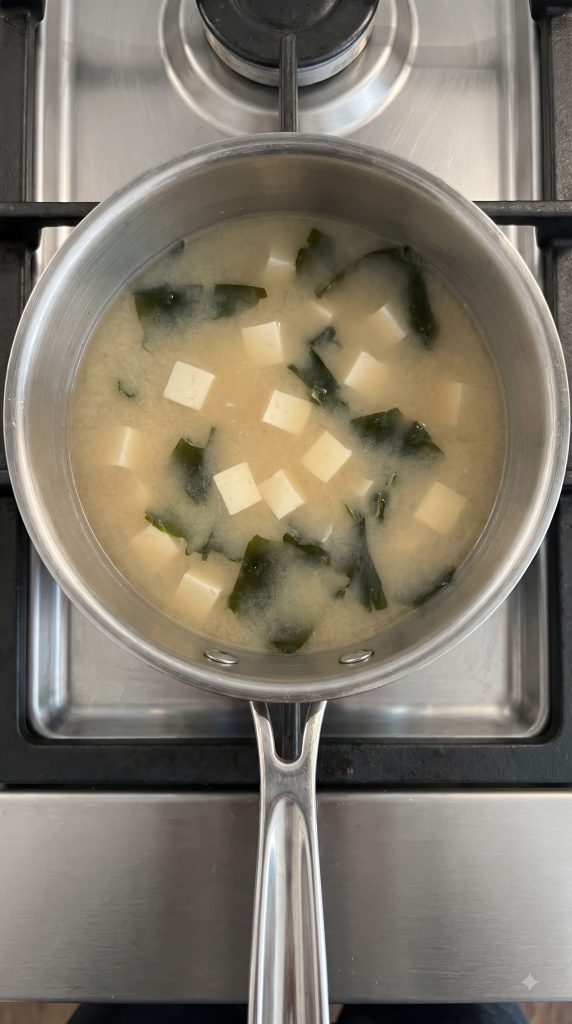
Whisk 3 tablespoons white miso paste into the reserved broth until smooth, with no paste lumps.
Pour the miso mixture back into the saucepan and stir gently to spread it through the soup. Let it stand off the heat for 2 minutes. Do not return it to a boil.
Step 4: Garnish and Serve
Divide the soup and tofu evenly among 4 bowls, gently swirling the broth first if the miso has settled.
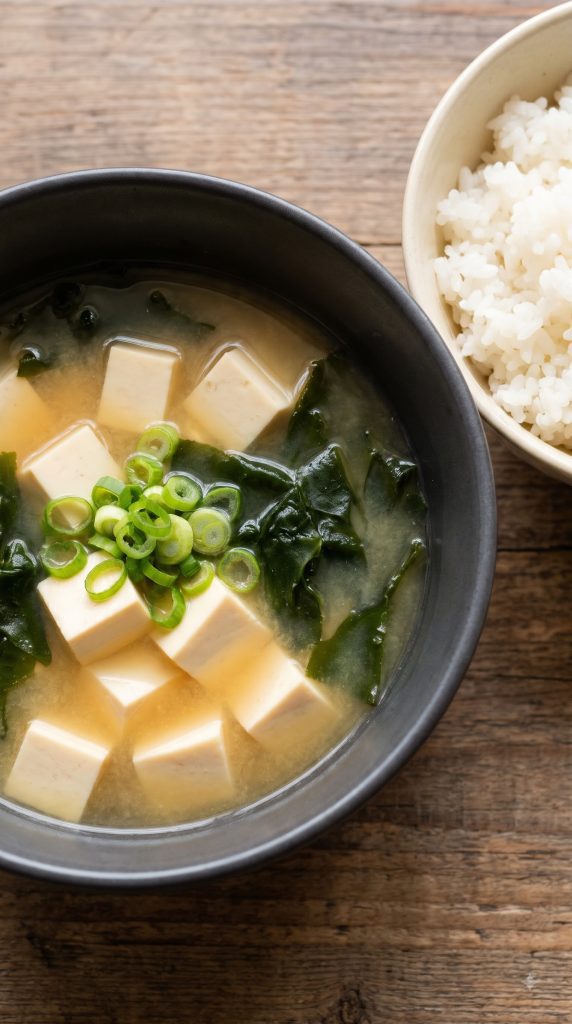
Scatter 2 tablespoons thinly sliced scallion greens evenly over the bowls, using 1/2 tablespoon per bowl.
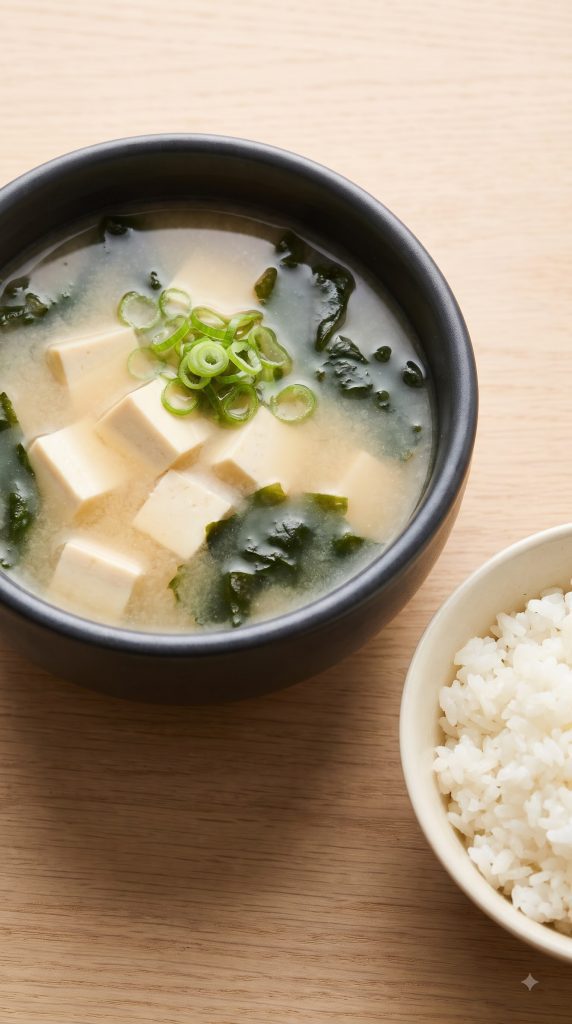
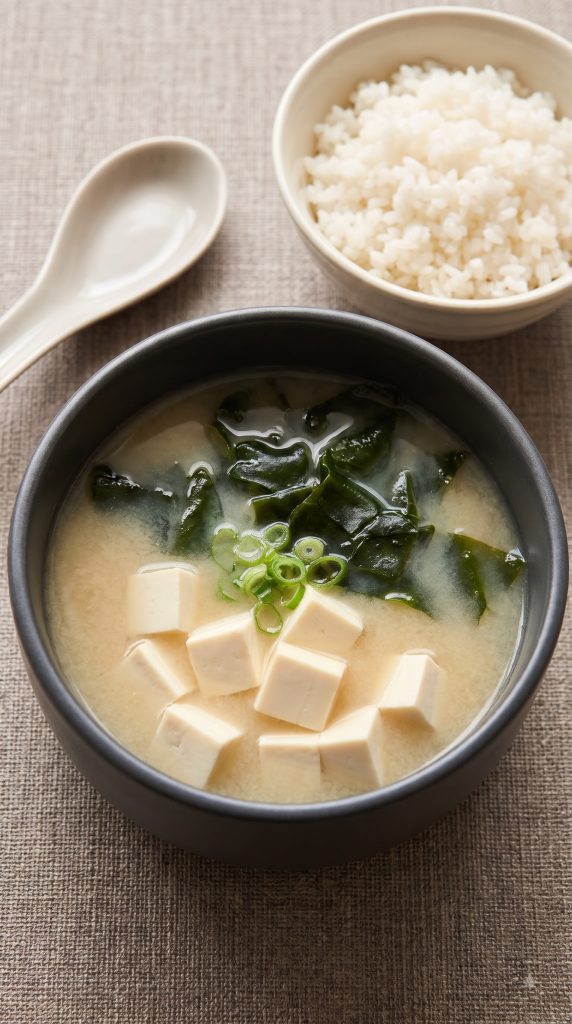
Serve right away. For a fuller meal, offer cooked short-grain rice and grilled salmon or shelled edamame alongside; the rice is the side shown here.
Why This Recipe Works (Quick Science)
Dashi brings savory depth without making the soup heavy. White miso adds salt, body, and a mild sweetness. Mixing it with a little broth first breaks up the paste so it spreads evenly through the pan.
Gentle heat warms the tofu without knocking the cubes apart. Adding miso off the heat helps keep its delicate aroma. Fine miso particles may settle as the soup stands; a gentle swirl brings the softly cloudy broth back together.
Common Mistakes to Avoid
- Using concentrated dashi as prepared broth: Dilute concentrates or granules according to their package before measuring the broth.
- Starting with salty stock: Miso already adds salt, so unsalted dashi gives you more control.
- Dropping miso straight into the pan: Dissolve it in a little broth first to avoid lumps.
- Boiling after adding miso: Keep the finished soup off the heat to preserve its gentle aroma.
- Stirring too hard: Soft tofu can break into crumbs.
- Adding too much wakame: The dried pieces expand as they absorb broth.
What to Serve With Miso Soup with Tofu
Cooked short-grain rice is a simple match and is the side shown with this soup. Add grilled salmon for a larger meal, or choose shelled edamame if you prefer a meat-free side. A small cucumber salad also adds a crisp contrast.
The soup itself uses bonito dashi, so it contains fish. For a vegetarian version, use unsalted kombu or kombu-shiitake dashi instead.
Substitutions and Variations
- Tofu: Medium tofu works if you want firmer cubes. Use the same weight and cut size.
- Miso: Yellow miso can replace white miso, though its flavor may be stronger. Red miso makes a deeper, more robust soup.
- Gluten-free option: Check both the miso and dashi labels. Some products contain barley or wheat.
- Vegetarian option: Replace the bonito dashi with the same amount of unsalted kombu or kombu-shiitake dashi.
Leftovers and Storage
Cool leftovers promptly and refrigerate in a covered container for up to 2 days for the best texture. Reheat only the portion you plan to eat, gently stirring so the tofu stays intact. Wakame softens further during storage, and freezing can make the tofu more porous.
Macros Information
Estimated per small bowl, including the scallion garnish and excluding optional sides:
- Calories: 70
- Protein: 6 g
- Carbohydrates: 5 g
- Fat: 3 g
- Saturated Fat: 0.5 g
- Fiber: 1 g
- Sugar: 2 g
- Sodium: 600 mg
These values are estimates. Tofu, miso, and dashi brands can change the numbers, especially sodium.
Frequently Asked Questions (FAQ)
Q: Which tofu works best?
A: Soft tofu gives a tender bite while holding a cube shape with gentle handling. Medium tofu is a good choice for firmer pieces.
Q: Can I use silken tofu?
A: Yes, but choose a block-style silken tofu and handle it carefully. Very soft silken tofu may break apart when stirred.
Q: What is dashi?
A: Dashi is a Japanese soup stock. This recipe uses prepared kombu-and-bonito dashi, which has a savory flavor and contains fish.
Q: Can I make this soup vegetarian?
A: Yes. Use unsalted kombu or kombu-shiitake dashi in place of bonito dashi, and check the other ingredient labels.
Q: Do I need to soak the wakame first?
A: No. Dried cut wakame can open directly in the broth during the gentle simmer. Follow any extra preparation directions on its package.
Q: Why is my miso soup cloudy?
A: Fine particles from the miso make the broth cloudy. Some settling is normal; gently swirl the soup before serving.
Q: Can I use red miso?
A: Yes, though it gives a stronger flavor and darker broth. White miso keeps this version mild.
Q: Why should I avoid boiling the miso?
A: A hard boil can dull its delicate aroma. Add it after turning off the heat and serve soon afterward.
Q: Can I make it ahead?
A: You can prepare the dashi ahead and keep the tofu and garnish ready. For the freshest flavor, warm the tofu and wakame and dissolve the miso just before serving.
Final Thoughts
Miso Soup with Tofu brings gentle flavor and tender texture to a simple bowl. Keep the broth at a low simmer, dissolve the miso off the heat, and finish with fresh scallion rings. Leave a comment with your favorite way to serve it. Happy cooking!