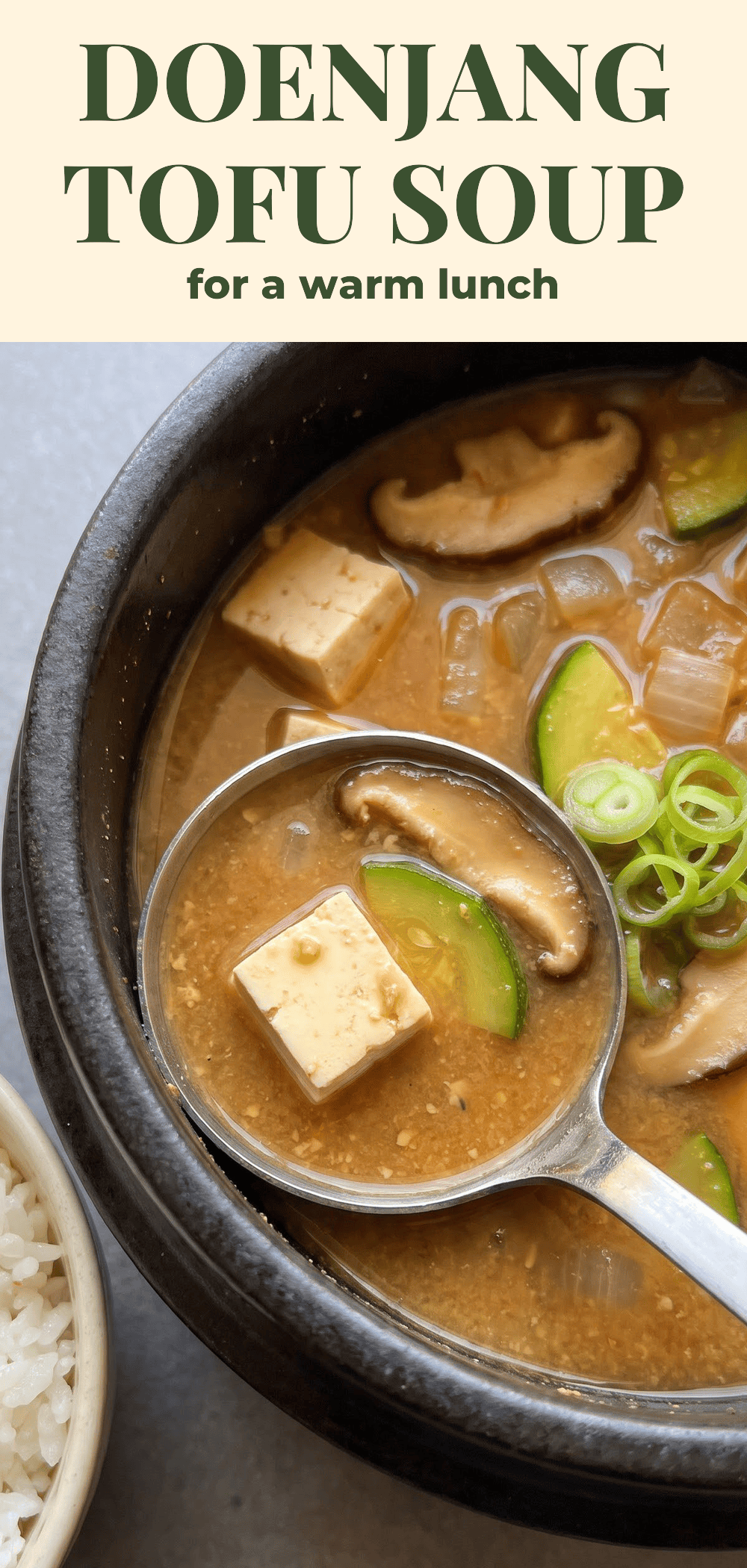
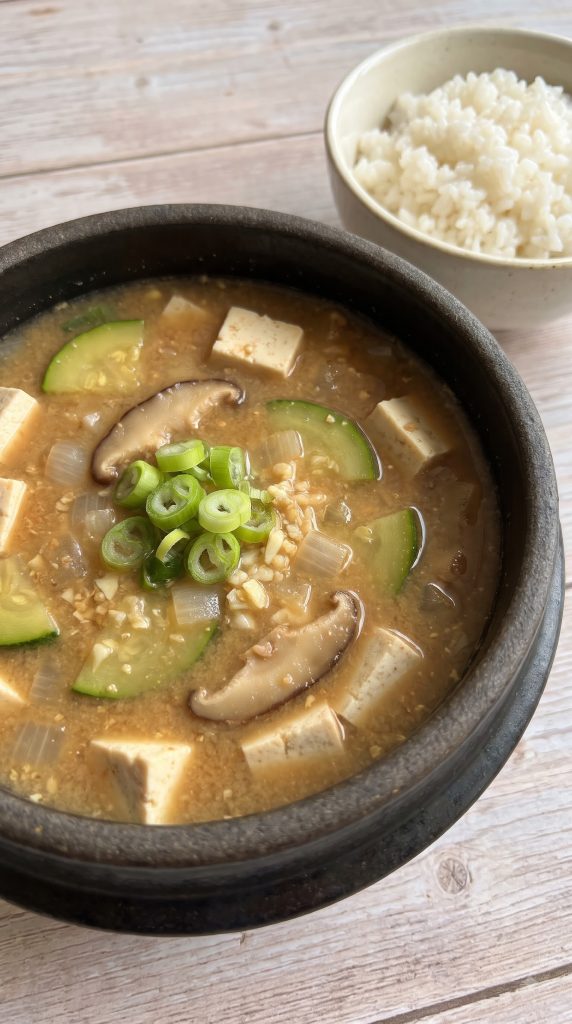
Doenjang Tofu Soup brings soft tofu and tender vegetables together in an earthy, savory broth. Korean fermented soybean paste gives it depth without a long cooking time. This meat-free version uses mushrooms and vegetable broth for a simple weeknight pot. Add rice on the side and you have a cozy meal in about 35 minutes.
Why I Love This Recipe
The appeal is in the balance: bold soybean paste, mild tofu, and vegetables that soften right in the broth. There is no separate pan to wash and no long list of seasonings to measure. Rice alongside lets you enjoy every spoonful of the savory broth.
- Big flavor: Doenjang does most of the seasoning work.
- Gentle texture: Tofu goes in near the end so the cubes stay soft and whole.
- Simple method: Everything cooks in a single pot.
- Easy to adjust: Unsalted broth leaves room for the salty soybean paste.
What You’ll Need
- Servings: 4, with rice on the side
- Prep Time: 15 minutes
- Cook Time: 20 minutes
- Total Time: 35 minutes
- Cooking Vessel: 3-quart stainless steel pot
Ingredients:
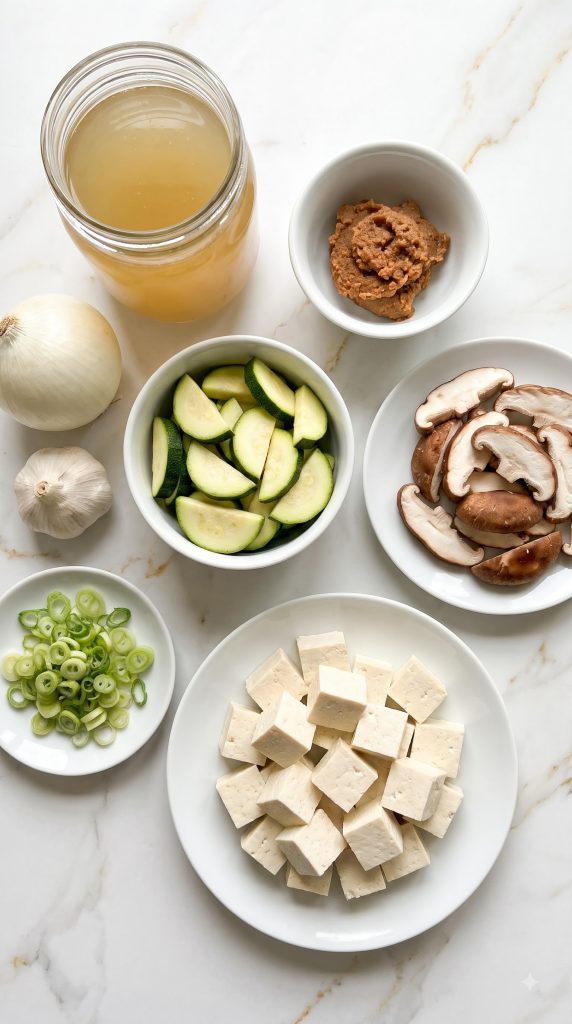
- 4 cups unsalted vegetable broth
- 3 tablespoons doenjang, Korean fermented soybean paste
- 4 ounces onion, diced into 1/2-inch pieces
- 8 ounces zucchini, cut into 1/4-inch-thick half-moons
- 4 ounces fresh shiitake mushroom caps, stems removed, sliced 1/4 inch thick
- 2 garlic cloves, minced
- 14 ounces medium-firm tofu, drained and cut into 3/4-inch cubes
- 2 tablespoons thinly sliced scallion greens, for garnish
Choose plain doenjang rather than ssamjang, which is a seasoned dipping paste. The salt level varies by brand, so unsalted broth gives you more control. Check the paste label if you need a vegetarian version; some seasoned products include seafood. Doenjang may also contain wheat.
Tools You Need
- 3-quart brushed stainless steel pot with two riveted loop handles and a matching lid
- Wooden cutting board
- Chef’s knife
- Measuring cups and spoons
- Long-handled stainless steel ladle with a round bowl
- Serving bowls
How to Make Doenjang Tofu Soup
Prepare the vegetables and tofu before you start; the cooking moves quickly.
Step 1: Dissolve the Soybean Paste
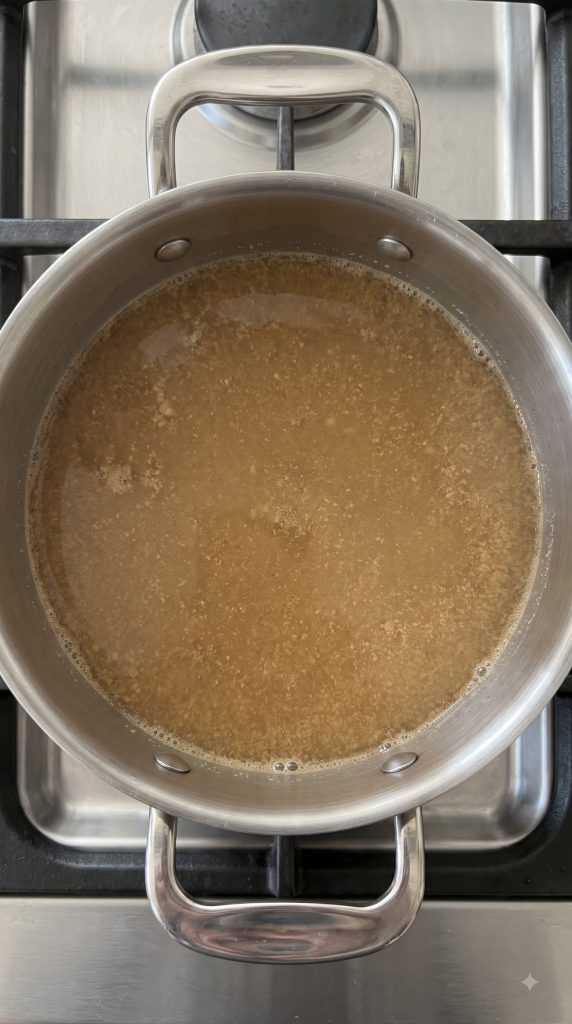
Pour 4 cups unsalted vegetable broth into a 3-quart stainless steel pot.
Add 3 tablespoons doenjang and stir, pressing any large lumps against the side until the paste is evenly dispersed. Small soybean flecks are normal.
Bring to a gentle simmer over medium-high heat, about 5 minutes.
Step 2: Simmer the Vegetables
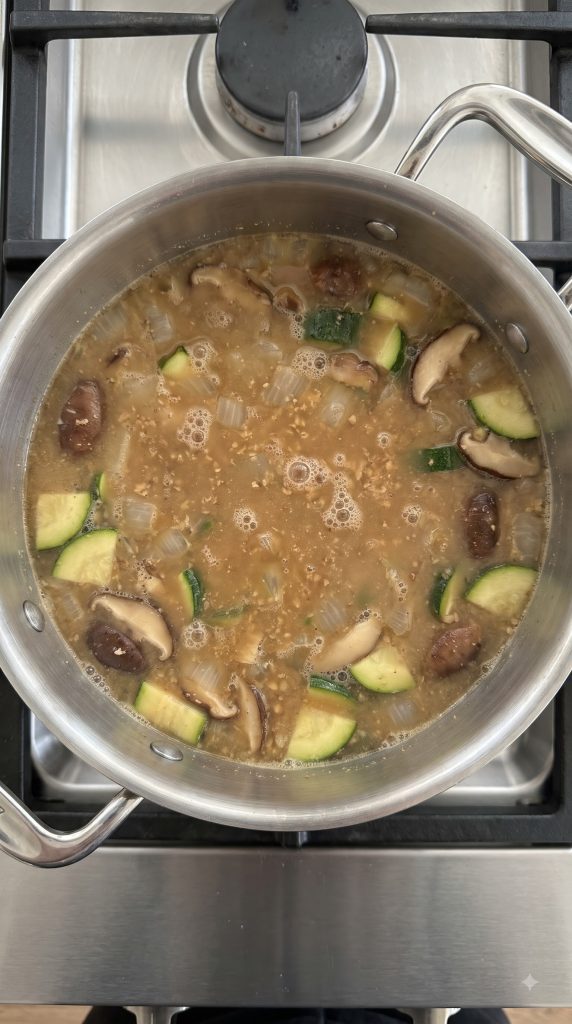
Add 4 ounces diced onion, 8 ounces zucchini half-moons, 4 ounces sliced shiitake caps, and 2 minced garlic cloves to the broth.
Stir gently, lower the heat to medium-low, and simmer uncovered for 8 minutes, until the onion softens and the zucchini is almost tender.
Step 3: Gently Cook the Tofu
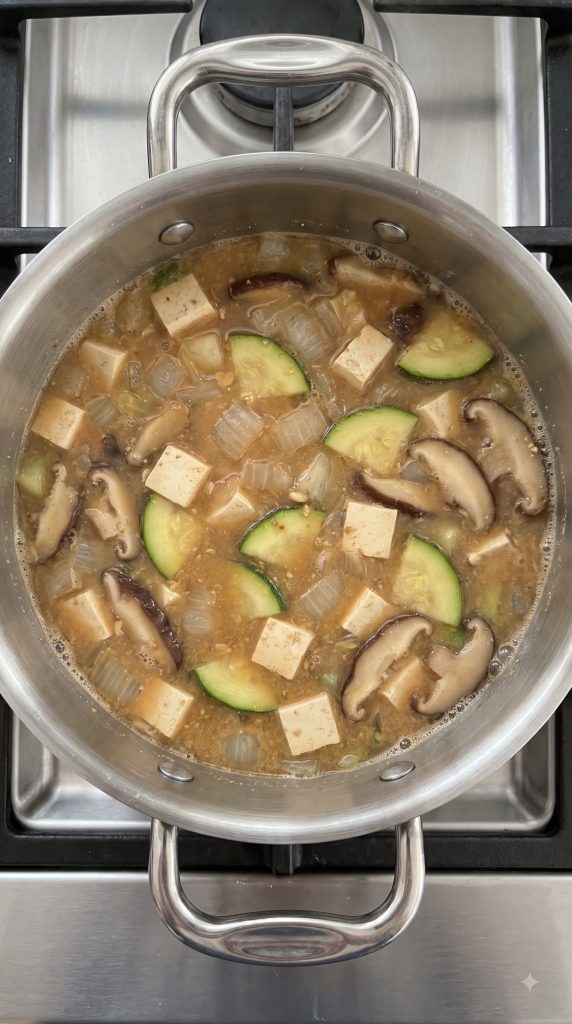
Slide 14 ounces medium-firm tofu, cut into 3/4-inch cubes, into the soup.
Keep the soup at a gentle simmer for 7 minutes, until the tofu is heated through and the zucchini is tender but still holds its shape. Avoid a hard boil and vigorous stirring.
Taste the broth before adding any extra seasoning; the doenjang should supply enough salt on its own.
Step 4: Garnish and Serve
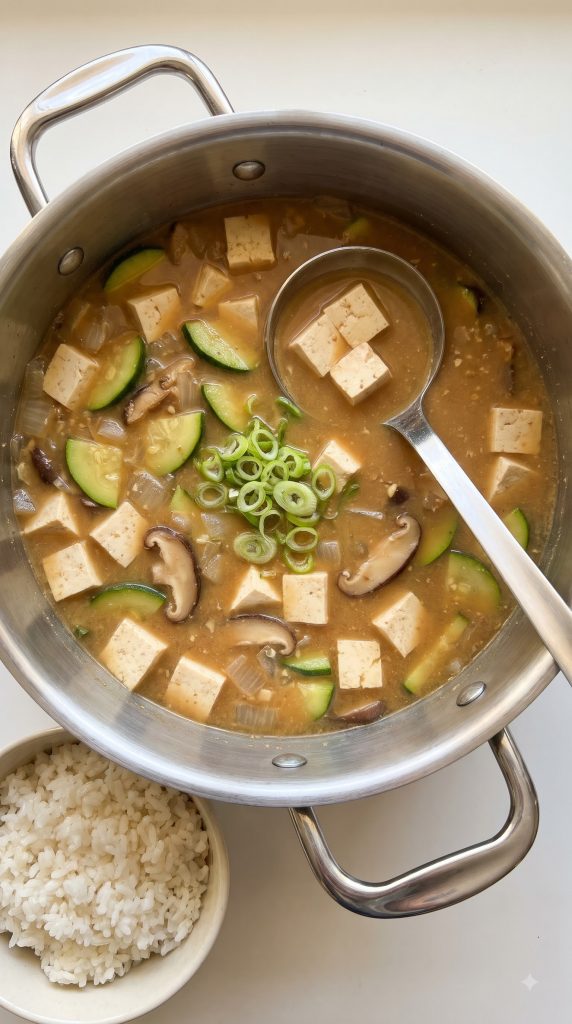
Turn off the heat and scatter 2 tablespoons thinly sliced scallion greens over the soup.
Divide the soup evenly among 4 bowls, keeping the tofu cubes intact and sharing the vegetables and broth evenly.
Serve with cooked short-grain rice on the side, if you like. Rice is an optional accompaniment and is not included in the nutrition estimate.
Why This Recipe Works (Quick Science)
Fermented soybean paste supplies salt and savory depth, while mushrooms build on that earthy flavor. Simmering the vegetables directly in the broth lets their flavor become part of the soup. Adding tofu later reduces the stirring and cooking it has to endure, which helps the cubes stay intact.
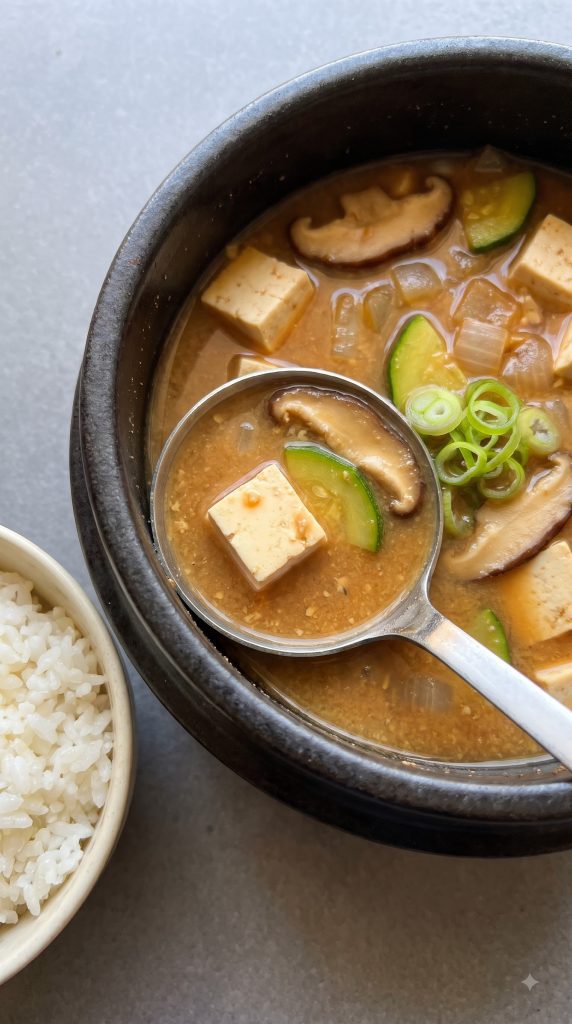
The finished broth should be thin and slightly cloudy, with fine soybean flecks. It is not a cream soup and does not need a thickener. This version has more broth than a compact stew, while keeping the familiar pairing of doenjang, tofu, and zucchini found in [Korean soybean paste stew](https://www.koreanbapsang.com/doenjang-jjigae-korean-soy-bean-paste/).
Common Mistakes to Avoid
- Using ssamjang: Its added seasonings change the flavor. Use plain doenjang for this recipe.
- Starting with salty broth: Paste already supplies plenty of salt. Unsalted broth keeps the balance easier to manage.
- Boiling the tofu hard: A rolling boil and rough stirring can break the cubes.
- Overcooking the zucchini: Stop when it is tender and still holds its shape.
- Expecting a smooth broth: Tiny soybean particles are normal; large undissolved paste lumps are not.
What to Serve With Doenjang Tofu Soup
Cooked short-grain rice is a simple match for the savory broth. Serve it in a separate bowl so each person can alternate between rice and soup. For a larger spread, add kimchi or a cucumber side dish. Choose vegetarian kimchi if you want to keep the whole meal meat-free.
Leftovers and Storage
For the best texture, enjoy leftovers within 3 days. Store in a covered container in the refrigerator and reheat gently, stirring carefully around the tofu.
Freezing is possible, but the tofu becomes spongier and the zucchini softer after thawing. Refrigerating gives a texture closer to the fresh soup.
Macros Information
Estimated per serving, based on 4 servings, including scallion garnish and excluding rice or other sides:
- Calories: 155
- Protein: 14 g
- Carbohydrates: 13 g
- Fat: 7 g
- Saturated Fat: 1 g
- Fiber: 3 g
- Sugar: 5 g
- Sodium: 720 mg
These are estimates. Tofu, broth, and doenjang brands can change the values, especially sodium.
Frequently Asked Questions (FAQ)
Q: What is doenjang?
A: It is Korean fermented soybean paste. It tastes salty, earthy, and deeply savory, and often contains small soybean pieces.
Q: Is this the same as miso soup?
A: No. This recipe uses Korean doenjang and a different vegetable mix. Miso can make a pleasant soup, but it changes the character of this dish.
Q: Which tofu works best?
A: Medium-firm tofu gives soft cubes that are easy to handle. Firm tofu also works. Silken tofu is more fragile and will break more easily.
Q: Do I need to press the tofu?
A: No. Drain the packing liquid and cut the tofu gently. Pressing is unnecessary for soup.
Q: Is this soup spicy?
A: This version has no added chili. Check your doenjang label, since some products include chili or other seasonings.
Q: Can I use a different mushroom?
A: Yes. Replace the 4 ounces shiitake caps with the same weight of sliced cremini mushrooms. The flavor will be a little milder.
Q: Can I use water instead of broth?
A: Yes, use 4 cups water in place of the broth. The result will be less rounded, but the doenjang and mushrooms still provide flavor.
Q: What if my soup is too salty?
A: Stir in unsalted water a little at a time, tasting between additions. Rice alongside also helps balance each bite, though it does not remove salt from the soup.
Q: Is this soup vegan?
A: It can be, with vegan vegetable broth and plain doenjang that contains no fish or other animal ingredients. Check both labels.
Final Thoughts
Doenjang Tofu Soup turns a short ingredient list into a comforting bowl with soft tofu, tender vegetables, and plenty of savory broth. Keep the simmer gentle and let the soybean paste set the flavor. Leave a comment with your favorite side to serve alongside it. Happy cooking!