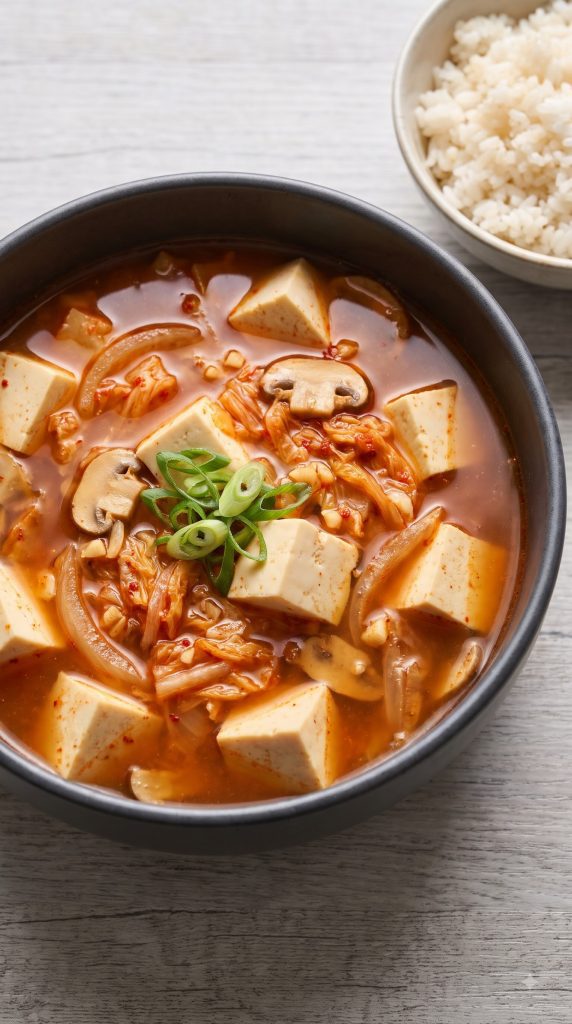
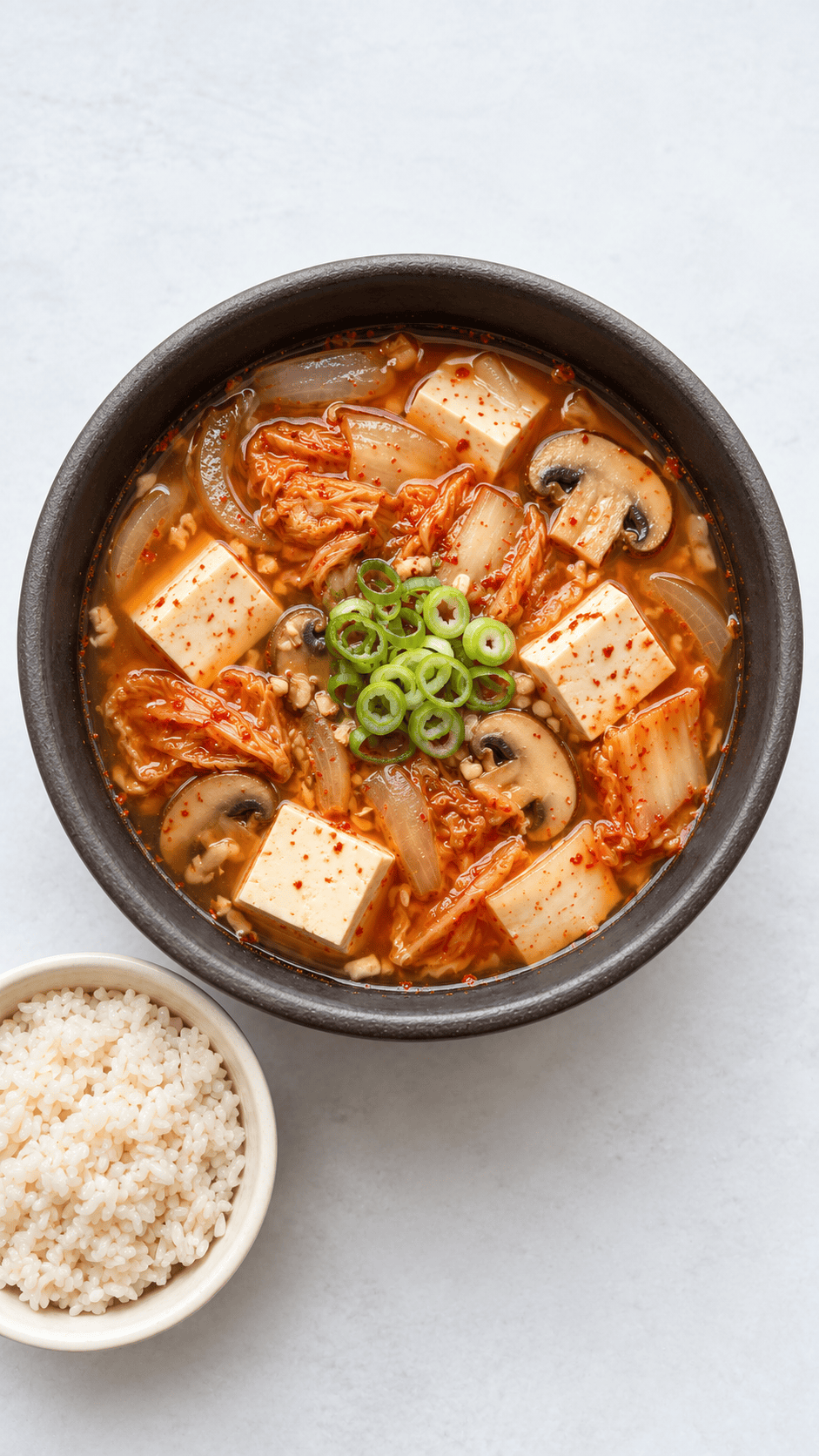
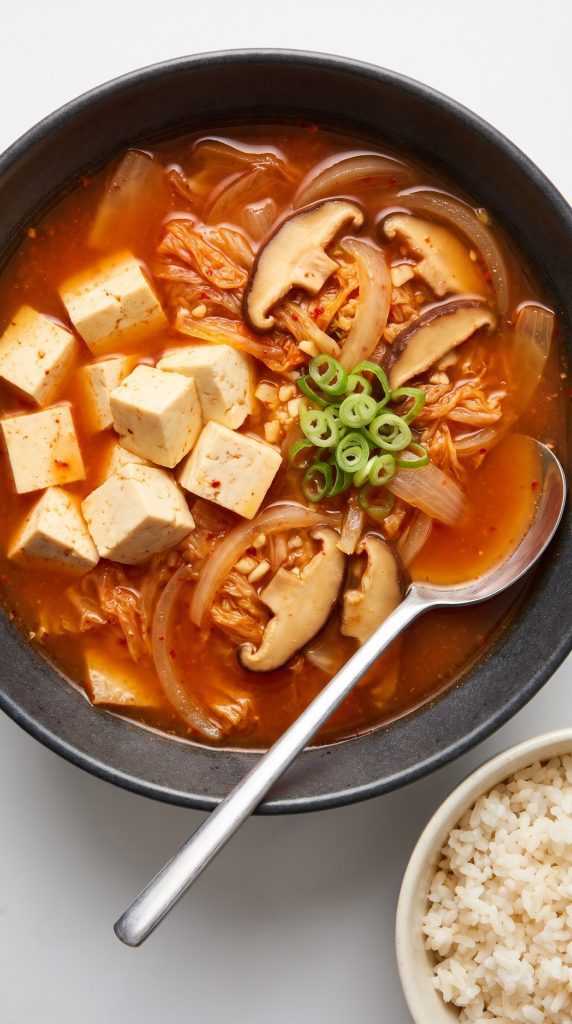
Kimchi Tofu Soup brings tangy kimchi, soft tofu, and savory broth together in one pot. Mushrooms add a little bite, while scallions give each bowl a fresh finish. The red-orange broth is full of flavor but stays thin enough to sip between bites. Serve it with rice for a simple, cozy meal.
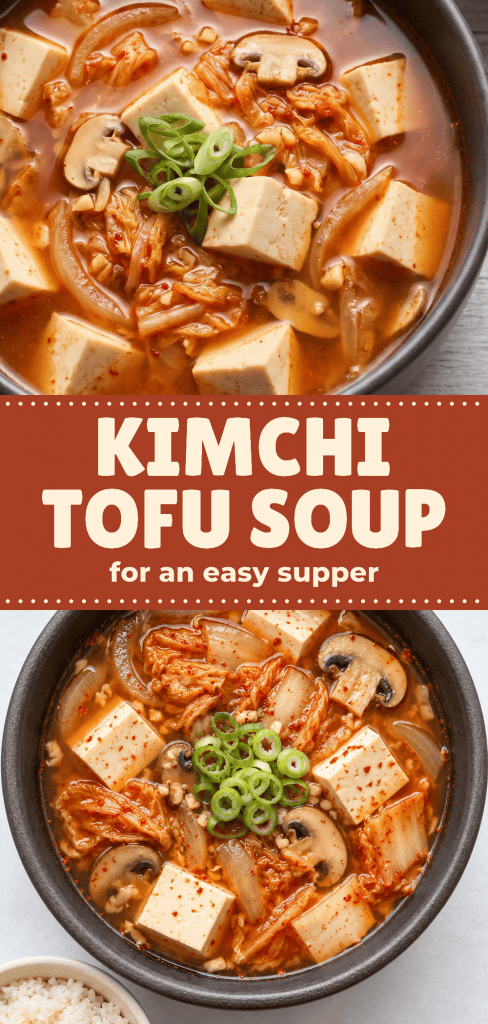
Why I Love This Recipe
A short ingredient list can still make a bold bowl of soup. Ripe kimchi brings tang and depth, while soft tofu gives you a gentle contrast in every spoonful. There is no need for a long simmer or a second cooking pot.
- One pot: Build the flavor and finish the soup in the same vessel.
- Soft and silky: Adding tofu near the end protects its delicate texture.
- Easy to adjust: Choose mild kimchi or reduce the chili flakes for less heat.
- Weeknight friendly: The whole recipe takes about 35 minutes.
What You’ll Need
- Servings: 3 main-dish servings
- Prep Time: 10 minutes
- Cook Time: 25 minutes
- Total Time: 35 minutes
- Pot Size: 3 quarts
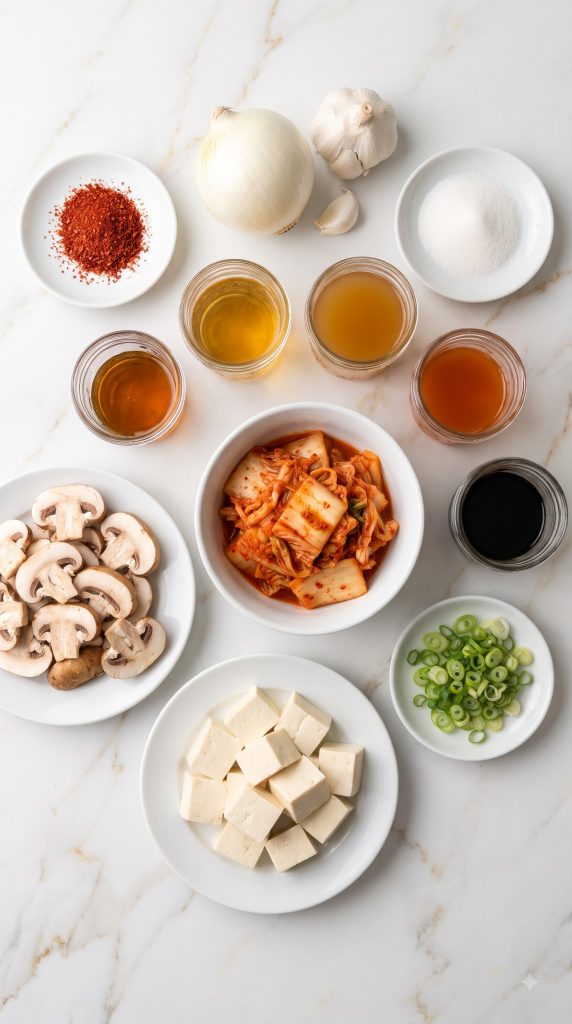
Choose ripe napa cabbage kimchi with a pleasantly sour taste. Use a water-packed block of soft tofu, rather than loose tube-packed tofu, for cubes that hold together. Do not press it.
- 1 tablespoon toasted sesame oil
- 1/2 medium onion, thinly sliced into half-moons (about 1/2 cup)
- 2 garlic cloves, minced
- 2 cups ripe napa cabbage kimchi, chopped into bite-size strips, measured without brine (about 12 ounces)
- 4 ounces cremini mushrooms, sliced about 1/4 inch thick
- 1 teaspoon gochugaru (Korean red pepper flakes)
- 3 cups low-sodium vegetable broth
- 1/4 cup kimchi brine, measured separately
- 1 tablespoon low-sodium soy sauce
- 1 teaspoon granulated sugar
- 16 ounces water-packed soft tofu, drained and cut gently into 1-inch cubes
- 2 scallions, thinly sliced into rings (about 1/4 cup), for garnish
Tools You Need
- 3-quart round brushed stainless steel pot with deep straight sides, a rolled rim, two riveted oval loop handles at opposite sides, and a matching domed steel lid; cook uncovered
- Wooden spoon and ladle
- Measuring cups and spoons
- Wooden cutting board and sharp knife
- Fine-mesh strainer for draining tofu
- Deep serving bowls
How to Make Kimchi Tofu Soup
Build the broth first, then add the tofu gently.
Step 1: Soften the Aromatics
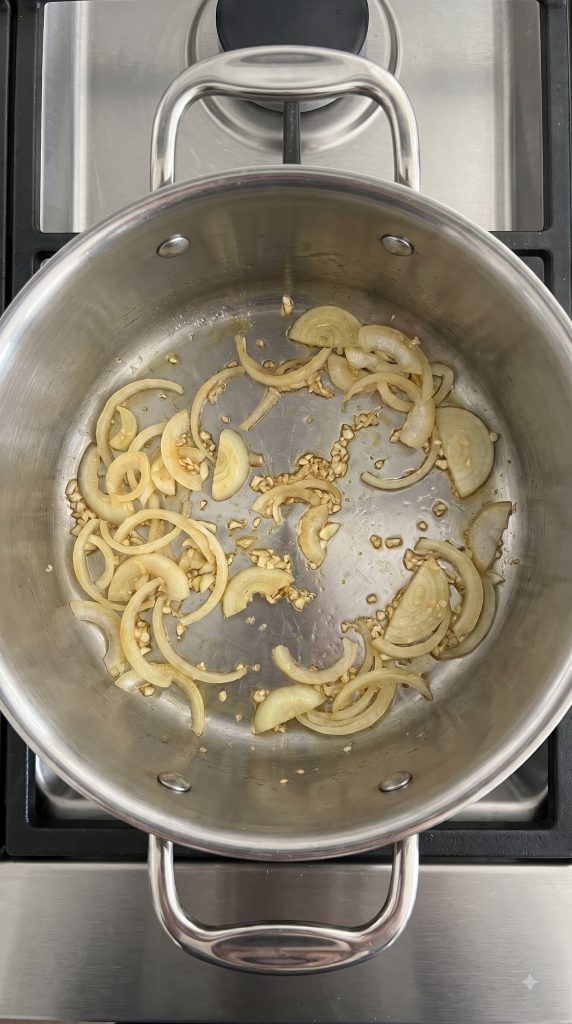
Heat 1 tablespoon toasted sesame oil in a 3-quart pot over medium-low heat.
Add 1/2 medium onion, thinly sliced into half-moons, and cook for 3 minutes, stirring often, until softened without browning.
Stir in 2 minced garlic cloves and cook for 30 seconds, just until fragrant.
Step 2: Cook the Kimchi and Mushrooms
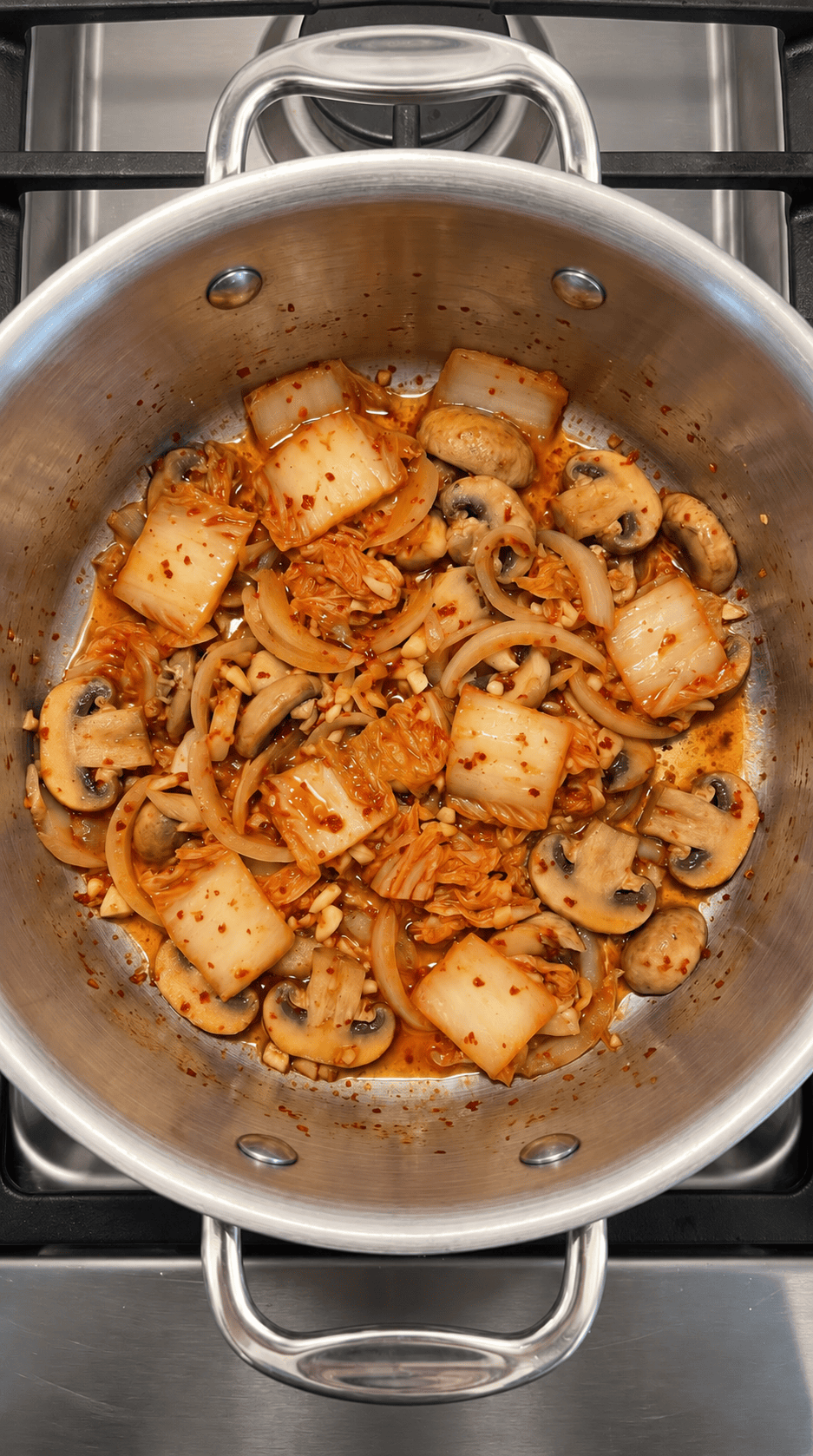
Add 2 cups chopped ripe napa cabbage kimchi, 4 ounces sliced cremini mushrooms, and 1 teaspoon gochugaru.
Cook over medium heat for 4 minutes, stirring often, until the mushrooms begin to soften and the kimchi looks glossy. Do not let the garlic scorch.
Step 3: Simmer the Broth
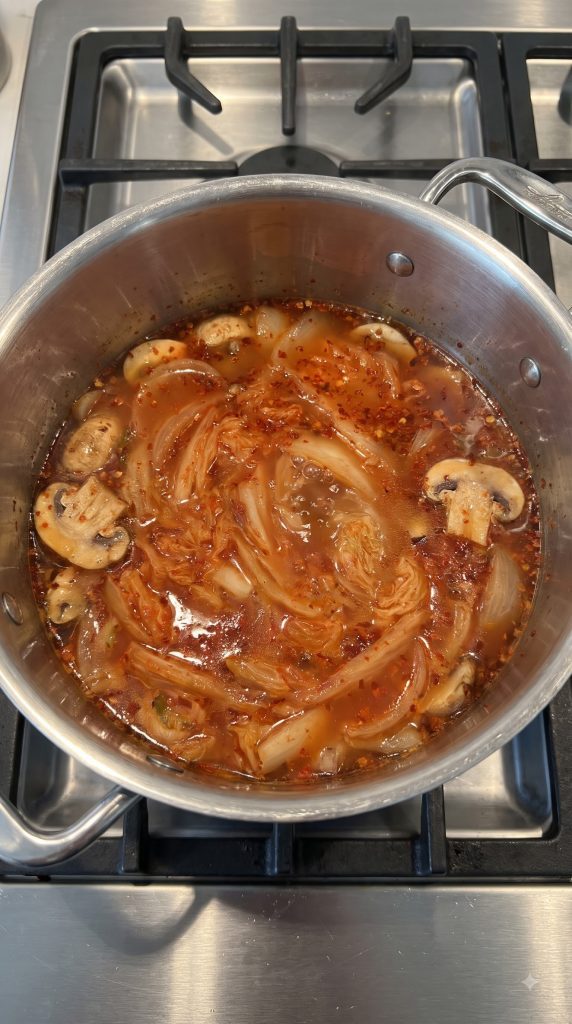
Stir in 3 cups low-sodium vegetable broth, 1/4 cup kimchi brine, 1 tablespoon low-sodium soy sauce, and 1 teaspoon granulated sugar.
Raise the heat to medium-high and bring to a gentle boil, about 2–3 minutes.
Reduce the heat to medium-low and simmer uncovered for 10 minutes, until the kimchi is tender and the onion has softened fully.
Step 4: Warm the Tofu Gently
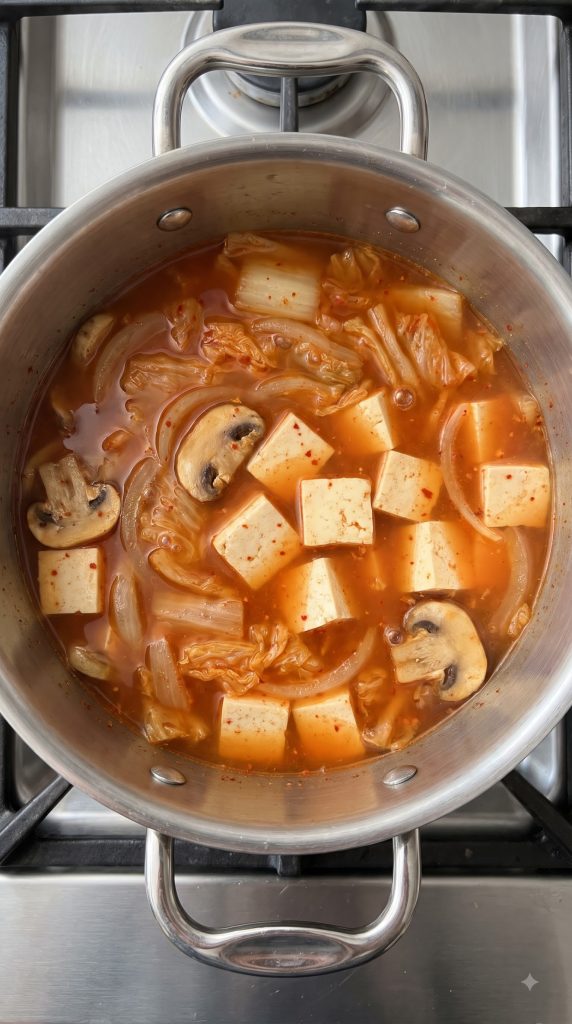
Slide 16 ounces drained soft tofu, cut into 1-inch cubes, into the broth. Nudge the cubes below the surface instead of stirring hard.
Simmer gently for 5 minutes, until the tofu is heated through and still holds its soft shape. Avoid a rolling boil.
Taste before serving. Kimchi varies in salt and heat, so avoid adding extra seasoning without tasting first.
Step 5: Garnish and Serve
Divide the soup and tofu evenly among 3 deep bowls.
Scatter 2 thinly sliced scallions, about 1/4 cup total, over the bowls, using one-third on each serving.
Serve with optional cooked short-grain rice in a separate bowl. Enjoy the rice alongside the soup or spoon a little broth over it as you eat.
Why This Recipe Works (Quick Science)
Ripe kimchi brings acidity and savory flavor to the broth. A brief cook in sesame oil softens its sharp edge before the broth goes in. Mushrooms add savory depth, while a little sugar rounds out the sourness without making the soup sweet.
Soft tofu has a delicate structure. Adding it late and keeping the simmer gentle helps the cubes stay intact. The broth stays thin and translucent rather than thick or creamy.
Common Mistakes to Avoid
- Using very fresh kimchi: Ripe, sour kimchi gives this short cook more depth.
- Adding unmeasured brine: Too much can make the soup very salty.
- Pressing soft tofu: It can crush the block. Drain it gently instead.
- Boiling hard after adding tofu: A strong boil can break the cubes apart.
- Adding salt too soon: Kimchi, brine, and soy sauce already bring plenty of seasoning.
What to Serve With Kimchi Tofu Soup
Cooked short-grain rice is a natural side for the tangy broth. Keep it in a separate bowl so you can choose how much to add to each bite. A simple cucumber salad also makes a crisp, refreshing side if you want another dish on the table.
Substitutions and Variations
- For a vegan soup: Choose kimchi made without fish sauce or shrimp paste, and check the broth label.
- For less heat: Reduce the gochugaru to 1/2 teaspoon. The kimchi will still bring some spice.
- For sturdier tofu: Use medium tofu in the same weight and cube size.
- For different mushrooms: Replace the cremini mushrooms with stemmed shiitake caps by weight.
- For a gluten-free version: Use gluten-free tamari instead of soy sauce and check the kimchi and broth labels.
Leftovers and Storage
Cool leftovers briefly, then refrigerate promptly in shallow airtight containers. Store for up to 3 days. Reheat only the portion you need in a small pot, stirring gently to protect the tofu.
You can freeze the soup for up to 2 months, but the tofu will become more porous and less silky. Thaw it in the refrigerator before reheating.
Macros Information
These are estimates per serving, based on 3 servings, including scallions and excluding rice or other optional sides. Brands of kimchi, broth, and tofu can change the numbers, especially sodium.
- Calories: 205 kcal
- Protein: 14 g
- Carbohydrates: 16 g
- Fat: 11 g
- Saturated Fat: 1.5 g
- Fiber: 4 g
- Sugar: 6 g
- Sodium: 1,250 mg
Frequently Asked Questions (FAQ)
Q: What kind of kimchi works best?
A: Ripe napa cabbage kimchi with a pleasantly sour taste works well. Measure the chopped cabbage separately from the brine.
Q: Can I use silken tofu?
A: Yes, but it is more fragile. Add large pieces gently and expect some to break apart. The main recipe uses a water-packed soft tofu block for more distinct cubes.
Q: Is this soup vegetarian?
A: Only if the kimchi is vegetarian. Many kinds contain fish sauce or salted seafood, so check the label.
Q: Do I need gochujang?
A: No. Kimchi, its brine, and gochugaru flavor this broth. Gochujang would make it sweeter and thicker.
Q: Can I leave out the mushrooms?
A: Yes. The broth will have a little less savory depth, but the kimchi and tofu will still carry the soup.
Q: Why is my soup too salty?
A: Kimchi and its brine vary a lot. Use low-sodium broth and soy sauce, measure the brine carefully, and taste before adding any salt.
Q: Can I make it ahead?
A: Yes. Cook the broth through Step 3, cool it promptly, and refrigerate. Add the tofu when reheating so it keeps a softer texture.
Q: Should I press the tofu?
A: No. Drain the packing water, but do not press soft tofu. Pressing can crush it before it reaches the pot.
Q: Why did my tofu crumble?
A: A hard boil or strong stirring can break soft tofu. Keep the heat gentle and move it with a spoon only as needed.
Final Thoughts
Kimchi Tofu Soup turns a few bold ingredients into a satisfying meal. Let the kimchi lead, keep the simmer gentle, and finish with fresh scallions. Leave a comment and share how you served your bowl. Happy cooking!