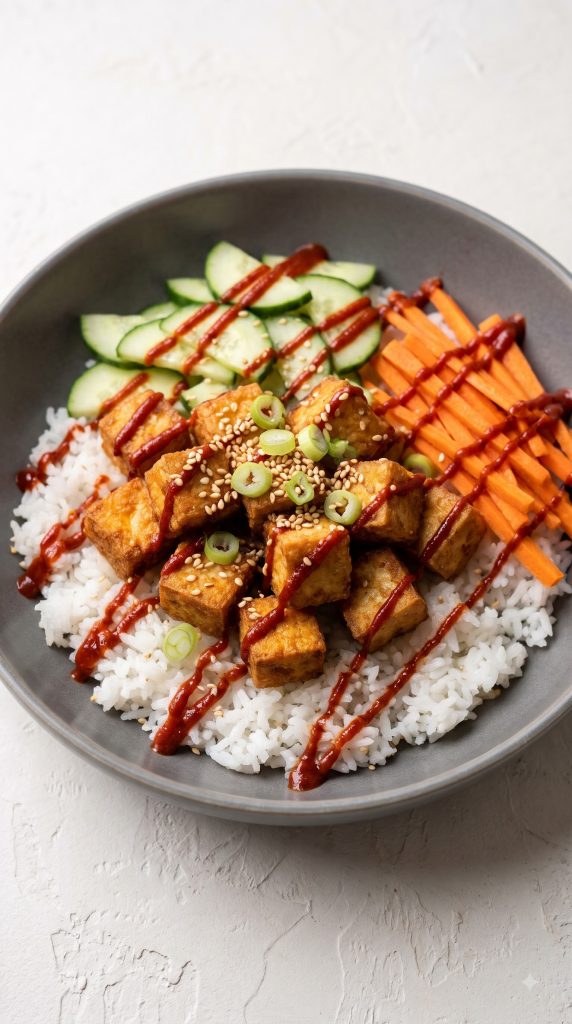
This Korean Gochujang Tofu Bowl brings crisp-edged tofu, fluffy rice, and crunchy vegetables together in one bright meal. A sweet, spicy gochujang sauce ties every bite together. The tofu stays tender inside, while cucumber and carrot keep the bowl fresh. It is a Korean-inspired bowl that is easy to make with a skillet and a few pantry staples.
Why I Love This Recipe
The best part of this bowl is the balance. The sauce has a little sweetness, a little tang, and plenty of savory flavor. Fresh vegetables give you something cool and crisp between bites of rich tofu. You can build the whole meal while the tofu cooks.
- Crisp edges: A thin cornstarch coating helps the tofu brown in the skillet.
- Big flavor: Gochujang gives the sauce depth without a long ingredient list.
- Flexible heat: Spoon on a little sauce first, then add more to taste.
- A complete bowl: Rice, tofu, and vegetables make a filling meal together.
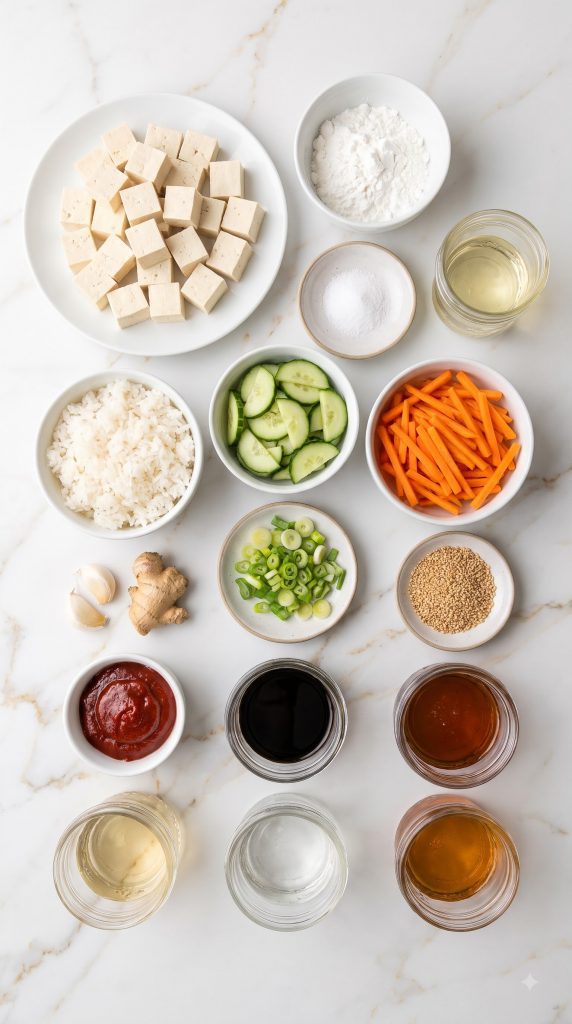
What You’ll Need
- Servings: 2 bowls
- Prep Time: 20 minutes
- Cook Time: 15 minutes
- Total Time: 35 minutes
- Pan Size: 12-inch nonstick skillet
Bowl Ingredients
- 14 ounces extra-firm tofu, drained
- 1 tablespoon cornstarch
- 1/4 teaspoon fine salt
- 1 tablespoon neutral oil, such as avocado oil
- 2 cups cooked white rice, warm and ready to serve
- 1 cup thin cucumber half-moons
- 1/2 cup carrot matchsticks
- 2 scallions, thinly sliced
- 2 teaspoons toasted sesame seeds
Gochujang Sauce
- 2 tablespoons gochujang
- 1 tablespoon reduced-sodium soy sauce
- 1 tablespoon maple syrup
- 1 tablespoon unseasoned rice vinegar
- 2 tablespoons water
- 1 teaspoon toasted sesame oil
- 1 garlic clove, finely grated
- 1 teaspoon finely grated fresh ginger
Gochujang is a fermented Korean chili paste. Heat and salt levels vary by brand, so choose one you enjoy. Use extra-firm tofu here; soft or silken tofu will not hold the same cube shape in the skillet.
Tools You Need
- Tofu press or clean kitchen towels and a weighted plate
- Wooden cutting board and knife
- Measuring cups and spoons
- Small round clear glass mixing bowl
- Large round clear glass mixing bowl
- Small whisk
- 12-inch nonstick skillet
- Silicone spatula
- Shallow serving bowls
How to Make Korean Gochujang Tofu Bowl
Have the cooked rice ready before you start frying so you can serve the tofu right away.
Step 1: Dry and Cut the Tofu
Wrap 14 ounces drained extra-firm tofu in clean kitchen towels and press gently under a weighted plate for 15 minutes.
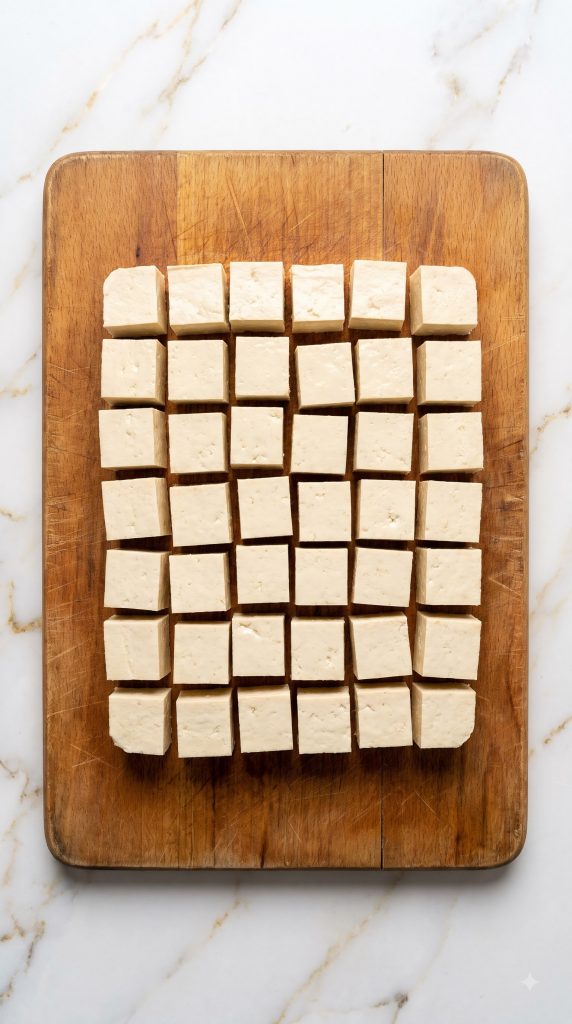
Pat the tofu dry, then cut it into 3/4-inch cubes. Keep the cubes intact rather than crumbling them.
Step 2: Prepare the Fresh Toppings
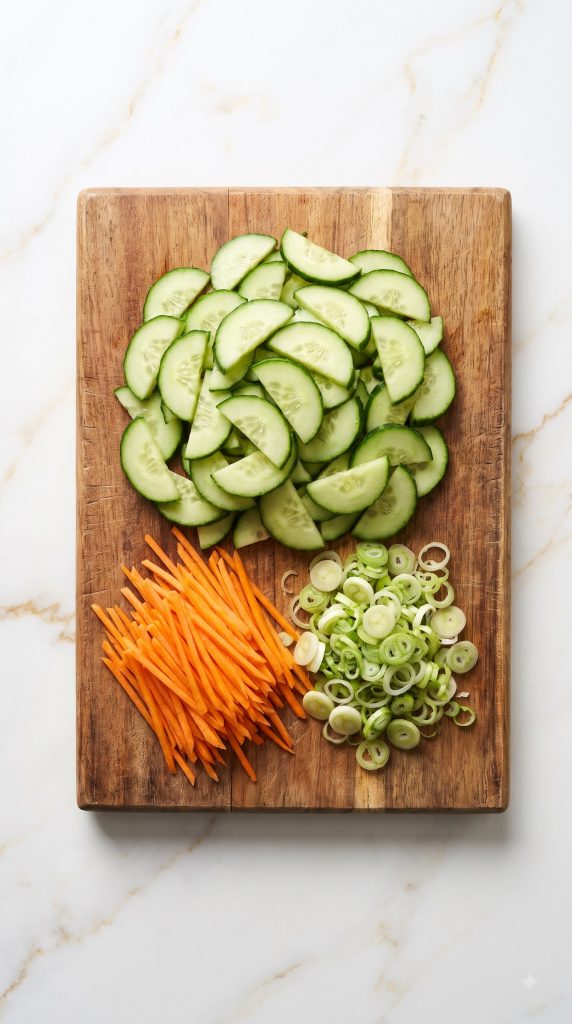
While the tofu presses, prepare 1 cup thin cucumber half-moons, 1/2 cup carrot matchsticks, and 2 thinly sliced scallions.
Keep these toppings separate so you can scatter them into the bowls at the end.
Step 3: Mix the Sauce
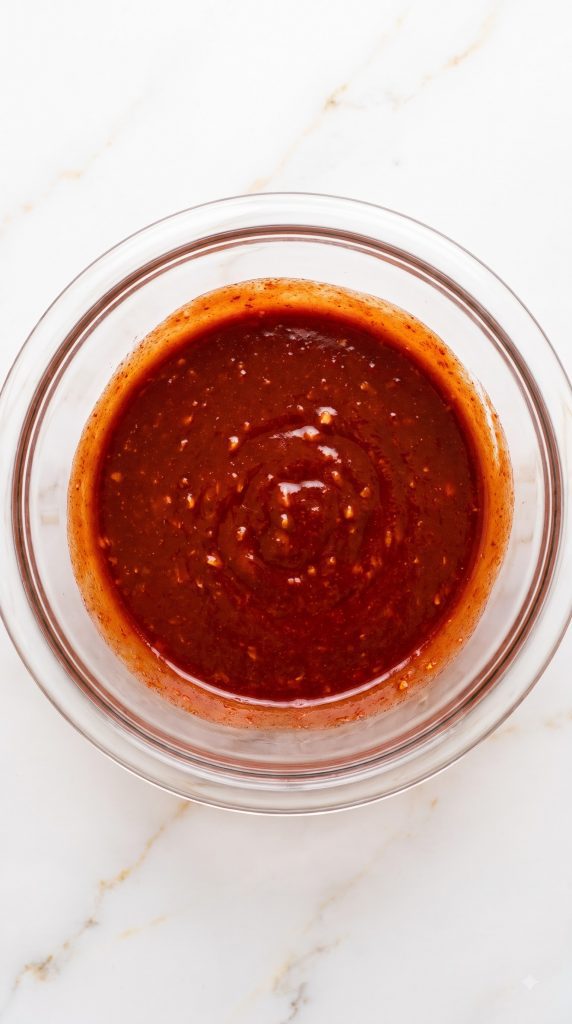
In a small glass bowl, whisk 2 tablespoons gochujang, 1 tablespoon reduced-sodium soy sauce, 1 tablespoon maple syrup, 1 tablespoon unseasoned rice vinegar, 2 tablespoons water, 1 teaspoon toasted sesame oil, 1 finely grated garlic clove, and 1 teaspoon finely grated fresh ginger until smooth.
The sauce should be deep brick-red, glossy, and thin enough to fall in a narrow ribbon. Set it aside; it goes on after the tofu cooks.
Step 4: Coat the Tofu
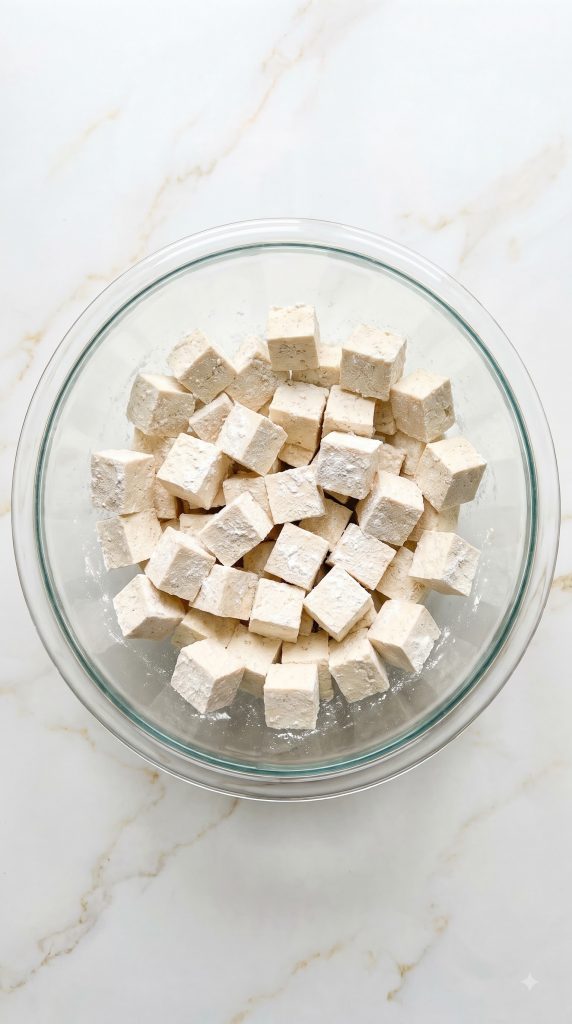
Place the 14 ounces pressed tofu cubes in a large glass bowl.
Sprinkle with 1 tablespoon cornstarch and 1/4 teaspoon fine salt, then toss gently until the cubes are lightly and evenly coated. Do this just before frying so the coating stays dry.
Step 5: Pan-Sear the Tofu
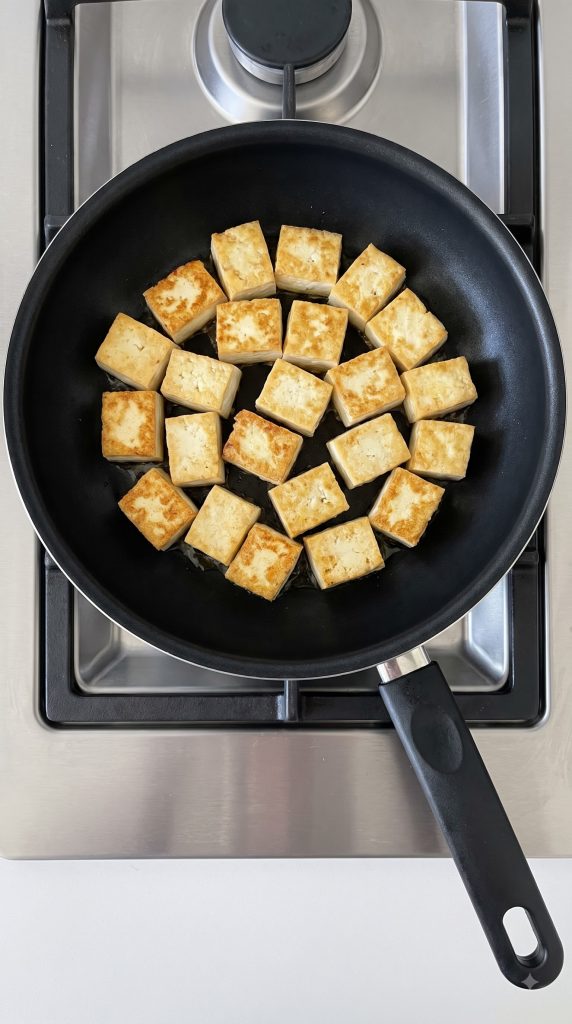
Heat 1 tablespoon neutral oil in a 12-inch nonstick skillet over medium-high heat for 1 minute, until shimmering.
Add the 14 ounces cornstarch-and-salt-coated tofu cubes in a single layer. Cook for 12–14 minutes, turning gently every 3–4 minutes, until several sides have a golden-brown crust and the centers remain tender.
Lower the heat if the coating darkens too fast. Remove the skillet from the heat when the tofu is ready; do not pour the sauce into the skillet.
Step 6: Build and Serve the Bowls
Divide 2 cups cooked white rice between 2 bowls, using 1 cup per bowl.
Add half of the cooked tofu batch to each bowl, then add 1/2 cup cucumber half-moons and 1/4 cup carrot matchsticks to each.
Divide the 2 sliced scallions and 2 teaspoons toasted sesame seeds evenly over the bowls.
Drizzle the prepared gochujang sauce in narrow, delicate zigzag lines across the whole surface, including all toppings. Start with 2 tablespoons sauce per bowl and serve the rest separately to taste; do not flood the rice.
Serve right away with the rice and crunchy vegetables already in the bowls for a complete meal. Optional vegan kimchi makes a tangy side.
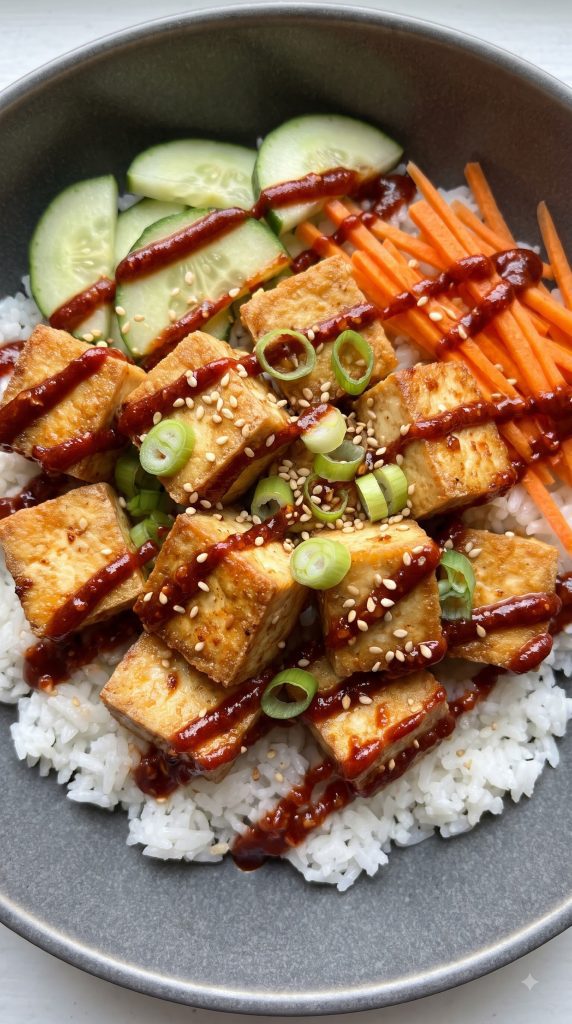
Why This Recipe Works (Quick Science)
Pressing removes some surface water, which helps the tofu brown instead of sitting in moisture. Cornstarch forms a thin crust when it meets the oil. Give each side time against the pan before turning it.
The sauce stays off the heat so its sugar does not scorch and its vinegar keeps a bright taste. Adding it at the table also helps the tofu hold its crisp edges. Gochujang and soy sauce bring savory depth, while maple syrup rounds out the chili heat.
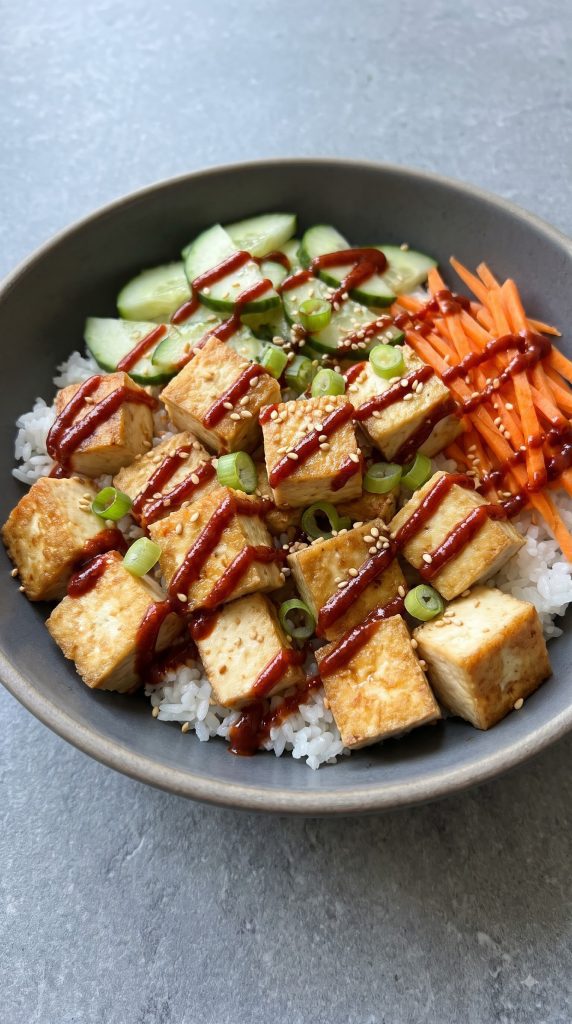
Common Mistakes to Avoid
- Skipping the drying step: Wet tofu is harder to brown and can make the coating gummy.
- Crowding the skillet: Keep the cubes in a single layer so their sides can touch the pan.
- Turning too soon: Let a crust form before gently lifting each cube.
- Cooking the sauce in the pan: The sugars can catch quickly. Keep it as a finishing drizzle.
- Using too much sauce at once: Start small so the crisp tofu and fresh vegetables still stand out.
What to Serve With Korean Gochujang Tofu Bowl
The white rice, cucumber half-moons, and carrot matchsticks in the bowl make this a complete meal. For more variety, add a small side of vegan kimchi. Check the label if you avoid fish or shellfish, since some kimchi contains seafood ingredients.
Substitutions and Variations
- Different grain: Use cooked brown rice instead of white rice. Prepare it before starting the tofu.
- Less heat: Use a mild gochujang and start with less finished sauce on your bowl.
- Soy sauce swap: Tamari can replace the soy sauce. For a gluten-free bowl, also choose a gochujang labeled gluten-free.
- More vegetables: Swap the carrot for thinly sliced red cabbage, using the same amount.
Leftovers and Storage
Keep the tofu, rice, vegetables, and sauce in separate covered containers so the vegetables stay crisp. Chill leftovers promptly and use within 3 days.
Reheat the rice until hot throughout. Warm the tofu in a skillet over medium heat until heated through, then add the fresh vegetables and sauce after reheating. The tofu will soften during storage, especially if it is already dressed.
Macros Information
These are estimates per bowl, including half of the full sauce batch; actual values vary by tofu and gochujang brand and how much sauce you use.
- Calories: 620
- Protein: 28 g
- Carbohydrates: 78 g
- Fat: 23 g
- Saturated Fat: 3 g
- Fiber: 5 g
- Sugar: 15 g
- Sodium: 1,150 mg
Frequently Asked Questions (FAQ)
Q: Is Korean Gochujang Tofu Bowl very spicy?
A: It has a noticeable chili kick. The heat depends on the gochujang brand and how much sauce you add. Choose a mild paste and drizzle lightly if you prefer less heat.
Q: Can I use firm tofu?
A: Yes, but press it well and handle it gently. Extra-firm tofu is easier to turn without breaking.
Q: Can I use silken tofu?
A: Silken tofu is too delicate for this coating and skillet method. Save it for a recipe designed around its soft texture.
Q: Do I need a tofu press?
A: No. Clean kitchen towels and a plate with a moderate weight work well. Avoid a heavy weight that crushes the block.
Q: Is this bowl vegan?
A: The ingredients listed are plant-based. Check the gochujang label and choose vegan kimchi if you serve it on the side.
Q: Can I make it gluten-free?
A: Use gluten-free tamari and a gochujang labeled gluten-free. Some chili pastes contain wheat, so check both labels.
Q: Can I make the sauce ahead?
A: Yes. Mix it ahead and refrigerate it in a covered container. Stir before drizzling, since the grated garlic and ginger may settle.
Q: Why is my tofu not crisp?
A: It may have been too wet, the pan may have been crowded, or the cubes may have been turned too often. Dry the tofu well and let each side brown before moving it.
Q: Can I use cold leftover rice?
A: Yes, if it was chilled promptly and stored properly. Reheat it until hot throughout before adding it to the bowls.
Final Thoughts
Korean Gochujang Tofu Bowl is full of bold sauce, tender tofu, and fresh crunch. Keep the sauce light at first and build each bowl to your taste. Leave a comment with your favorite vegetable swap or how much heat you like.
Happy cooking!